
The Application Gallery features COMSOL Multiphysics® tutorial and demo app files pertinent to the electrical, structural, acoustics, fluid, heat, and chemical disciplines. You can use these examples as a starting point for your own simulation work by downloading the tutorial model or demo app file and its accompanying instructions.
Search for tutorials and apps relevant to your area of expertise via the Quick Search feature. Note that many of the examples featured here can also be accessed via the Application Libraries that are built into the COMSOL Multiphysics® software and available from the File menu.

Fluence rate is a key parameter for ultraviolet (UV) water purifier. It describes the amount of radiation that pathogens absorb and is then directly related to the disinfection level of the purifier. The aim of this example is to demonstrate the fluence rate calculation with the ... Read More
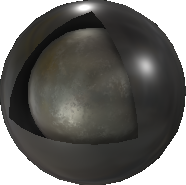
The purpose of this model is to introduce the specular reflection in Surface-to-Surface Radiation using the ray-shooting algorithm. Different parameters are available to the user to yield better accuracy in the results when using the ray-shooting algorithm. The model is a standard ... Read More
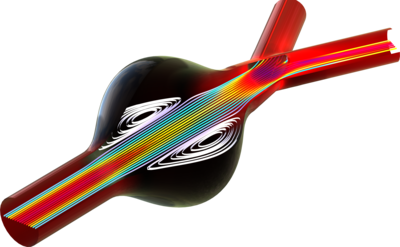
To understand the risk of coagulation and blood clot formation in an abdominal aortic aneurysm (AAA), modeling and simulation can be used to study the blood flow through the AAA. In this example, blood is modeled as an Oldroyd-B fluid. While this is a generic example, if instead using ... Read More
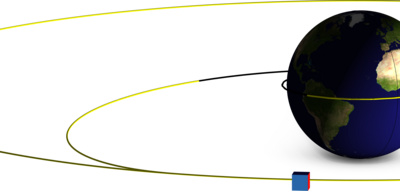
This model shows the workflow to define a transfer orbit trajectory with user defined orbit option. The direct solar, albedo, and Earth radiative thermal loads are analyzed during the transfer from low Earth orbit to geostationary orbit. Read More
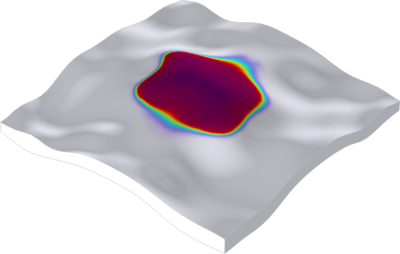
Modeling and simulation is useful for evaluating the feasibility of storing hydrogen underground. In this example of a geological formation, hydrogen is injected through an injection well at a rate of 1 kg/s over a period of 2 years, until it is ready to be extracted and discharged ... Read More
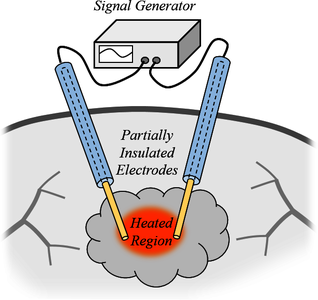
This example shows how to model tissue ablation through applying RF radiation. A more detailed description of the phenomenon and the modeling process can be seen in the blog post "Study Radio Frequency Tissue Ablation Using Simulation". Read More

Opto-acoustophoresis is a term used to describe the interplay between acoustics and optical fields. In most cases (including this) the optical field is heating up the material and therefore affecting the acoustic field. In this example of an acoustic trap a set of particle are trapped ... Read More
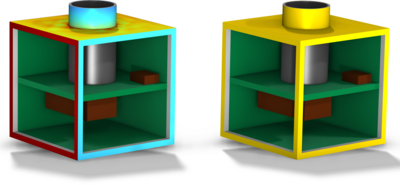
This model aims to demonstrate how a multilayer insulation can affect the temperature distribution of a satellite orbiting around the Earth. It is based on the Spacecraft Thermal Analysis model available in the Application Library. Read More
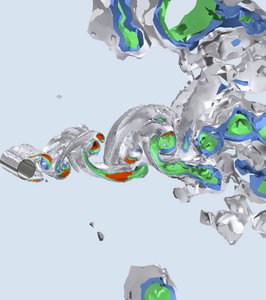
The model compare the two RANS models SST and SST-SAS for turbulent flow around a cylinder. The SST-SAS model resolve more transversal turbulent structures compared to the SST model. Read More
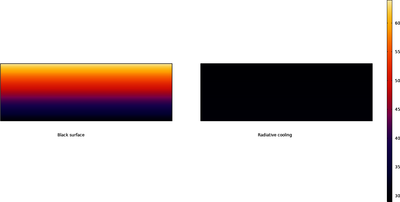
Because the atmosphere is nearly transparent to wavelengths in the range 8 to 13 µm (atmospheric window) for a clear sky, it is possible to cool down a surface even during a sunny day. This model compares the temperature distribution on a concrete block exposed to ambient and solar ... Read More


