
The Application Gallery features COMSOL Multiphysics® tutorial and demo app files pertinent to the electrical, structural, acoustics, fluid, heat, and chemical disciplines. You can use these examples as a starting point for your own simulation work by downloading the tutorial model or demo app file and its accompanying instructions.
Search for tutorials and apps relevant to your area of expertise via the Quick Search feature. Note that many of the examples featured here can also be accessed via the Application Libraries that are built into the COMSOL Multiphysics® software and available from the File menu.
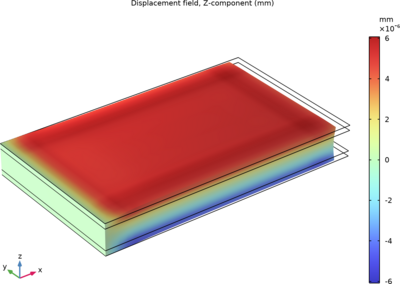
This tutorial is intended as a simple example showing how to model piezoelectric devices using the layered shell functionality. Two cases of material orientation are investigated. In the first case, the pole axis is normal to the shell surface, which results in a change in thickness of ... Read More
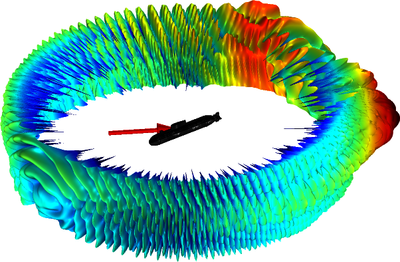
The primary defense of a submarine lies in its capacity to remain hidden during operation. As radio waves are strongly absorbed by seawater, sound navigation ranging, or sonar, is one of the main methods used for the detection of submarines. Sonar systems are also used for underwater ... Read More
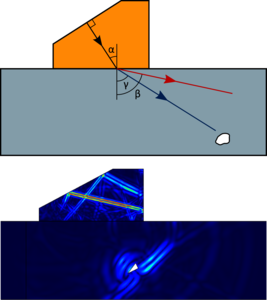
Angle beam ultrasonic units are used for nondestructive testing (NDT) of solid objects, such as metal pipes. They are especially useful for detecting flaws in and around welding areas, such as pores, small cracks, lack of fusion, etc. Angle beam NDT is often used where the straight beam ... Read More
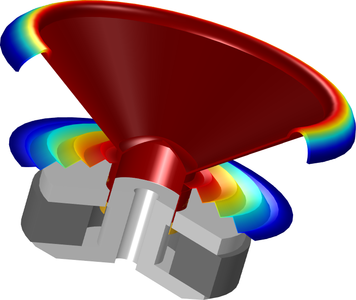
This example shows how to model a loudspeaker driver of the dynamic cone type, common for low and medium frequencies. The analysis is carried out in the frequency domain and thus represents the linear behavior of the driver. The model analysis includes the total electric impedance and ... Read More
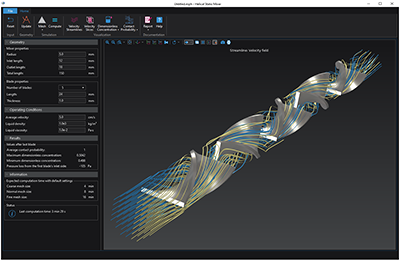
This app demonstrates the following: Geometry parts and parametric geometries Dark theme Use of subwindows Material appearance visualization with environment reflections Report generation for both Microsoft® Word and Microsoft® PowerPoint Options for setting different mesh sizes ... Read More
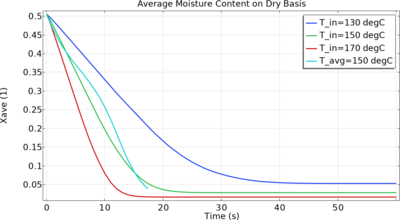
This model demonstrates how to vary the inlet temperature in a superheated steam drying process so as to minimize the time, while constraining both the energy consumption and the final moisture content. Read More
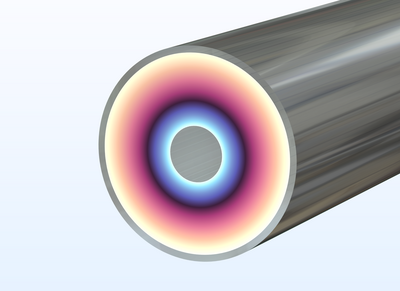
This example demonstrates how to compute transmission line parameters such as series resistance, series inductance, shunt conductance, and shunt capacitance per unit length using the predefined Transmission Line RLGC Parameters multiphysics interface. The demonstration also includes the ... Read More

This model demonstrates the transport of grains using a screw conveyor. The grains enter the conveyor through a chute and are transported over an incline by a rotating screw. This model also demonstrates how to build and run a model method that evaluates the mass flow rate. Read More

The reliability of a bike frame can be estimated by analyzing the structural stress subjected to different load cases. This app leverages LiveLink™ for SOLIDWORKS® to interactively update the geometry while computing stress analyses. Using this app, you can easily test different ... Read More
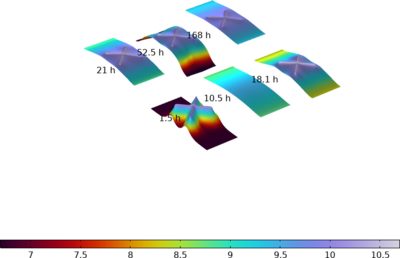
An established method for benchmarking the atmospheric corrosion resistance of materials is the use of accelerated corrosion tests (ACT) performed in climate chambers. The main purpose of the ACTs is to make reliable and fast predictions of the long time behavior. The tests expose ... Read More


