
Explore the innovative ways multiphysics simulation is being used worldwide to advance research
Multiphysics modeling and simulation drives innovation across industries and academia — as is evidenced by the many uses showcased in the technical papers and posters presented by engineers, researchers, and scientists at the COMSOL Conference each year.
Draw inspiration from the recent proceedings collected below, or, to find a specific presentation or filter by application area or conference year/location, use the Quick Search tool.
View the COMSOL Conference 2026 Collection

The yeast Saccharomyces cerevisiae has been used for the study of aging in eukaryotic cells. The traditional method for this study uses micromanipulators which makes it difficult, time consuming and expensive. Over time, different microfluidic platforms, usually referred to as 'mother ... Read More

Microphysiological systems (MPS) combine microfluidics, MEMS, and biotechnology techniques to mimic human organ function in vitro. Such devices are being developed to provide better levels of tissue and organ functionality compared with conventional cell culture systems, and have great ... Read More

Recent events underscore the importance of rapid diagnostic tests for detecting viruses such as the SARS-CoV-2 coronavirus or for screening cancer biomarkers. Many fluidic-based diagnostics applications require careful control of chemical and biological species concentrations. In this ... Read More
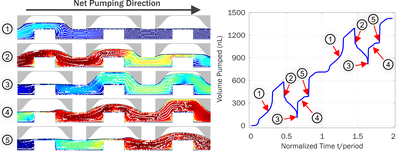
While electrostatic actuators feature prominently among the most widely employed classes of actuators for microelectromechanical systems (MEMS), conventional embodiments of these devices (e.g., parallel plate structures) notoriously suffer from several significant drawbacks. Most ... Read More

Droplet-based microfluidic systems are emerging as an ideal platform for the high-throughput screening of eukaryotic cells aimed to understand the complex, multidimensional, and dynamic biological processes [1]. Here, two aqueous droplets – each containing a eukaryotic cell – suspended ... Read More

Near-field scanning optical microscopy (NSOM) unifies the potential of scanning probe technology with the power of optical microscopy as if like having eyes into the nanoworld. To efficiently channel the illumination light to the tip apex and acquire optical images beyond the diffraction ... Read More
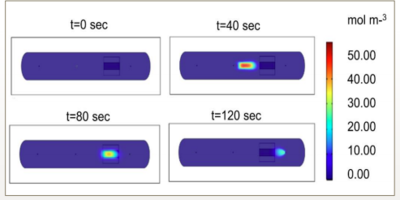
The design of highly-sensitive thermoelectric microfluidic sensors for the characterization of biochemical processes is an important area of engineering research. This study reports three-dimensional numerical analysis of the critical design parameters of a continuous-flow biosensor with ... Read More
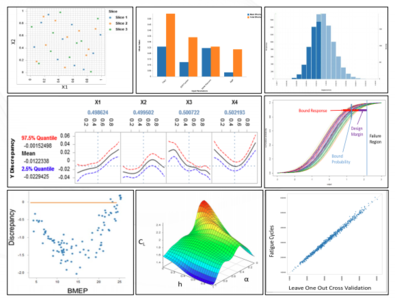
The use of computer simulations to analyze systems during the design process is a popular approach for validating and optimizing designs. But simulations are deterministic in nature and do not consider the uncertainty in design, manufacturing, and use of the product. Using predictive ... Read More


