
See How Modeling and Simulation Is Used Across Industries
Multiphysics modeling and simulation drives innovation across industries and academia — as is evidenced by the many uses showcased in the technical papers and posters presented by engineers, researchers, and scientists at the COMSOL Conference each year.
Draw inspiration from the recent proceedings collected below, or, to find a specific presentation or filter by application area or conference year/location, use the Quick Search tool.
View the COMSOL Conference 2025 Collection
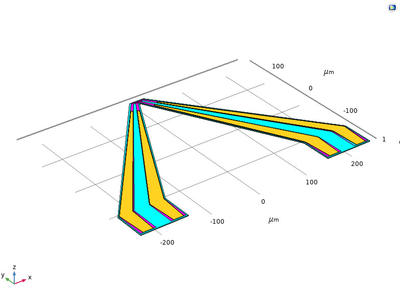
Volatile organic compounds (VOCs) are a large group of chemicals that can be found in many products that we use to build and maintain our homes. Some of the VOCs such as benzene, formaldehyde, ethylene glycol, etc. can be found in our everyday life in the form of paints, cleaning agents, ... Read More
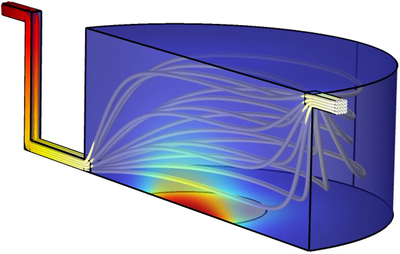
Organs-on-Chips (OoCs) are microfluidics-based systems that aim to recapitulate the in-vivo behaviour of specific organs. Using a network of microfluidic channels, OoCs provide a biophysical and biochemical environment to sustain complex 2D and 3D cell cultures systems that recapitulate ... Read More

Optical biosensors are powerful analytical tools for detecting and quantifying biological molecules and particles with high sensitivity and specificity. These devices operate on the principle of detecting changes in optical signals. For example, surface plasmon resonance (SPR) biosensors ... Read More

Introduction Most current thermoregulation models represent the body in significantly simplified forms, e.g., cylinders or spheres. These simple geometries do not fully represent the complexity of bones, organs, etc. contained in the human body. Modern medical technologies allow for more ... Read More

Atomic force microscopy (AFM) has been widely recognized as an essential tool that enables the imaging of surface, measuring and localizing many different forces and becoming a standard technique for force spectroscopy at the nanoscale. While conventional AFM is well-developed, recent ... Read More

Plasmonic-based biosensors have emerged as a powerful, cost effective and portable platform for phatogen and biomarker detection. In particular, Localized Surface Plasmon Resonance (LSPR) based systems, which rely on resonance shift tracking, present high sensitivity, specificity and ... Read More

Ion mobility spectrometry provides fast detection of very low concentrations of chemical substances. Simple instrumentation combined with high sensitivity and high selectivity are the advantages of this technique. One well established field of application is the detection of hazardous ... Read More
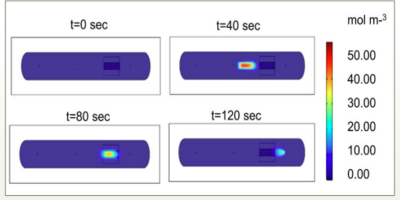
The design of highly-sensitive thermoelectric microfluidic sensors for the characterization of biochemical processes is an important area of engineering research. This study reports three-dimensional numerical analysis of the critical design parameters of a continuous-flow biosensor with ... Read More
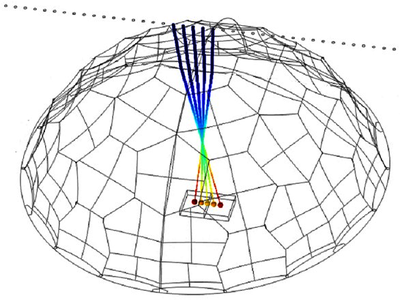
PIR (Passive Infrared) sensor is the most widely used motion sensor for occupancy detection in building automation applications. Normally, only the binary information indicating presence or absence is used. However, an advanced analysis of the PIR sensor analog signal can results in more ... Read More

With the use of COMSOL Multiphysics®, a full characterization of star shaped geometry structures of silver-zinc oxide (Ag-ZnO-Au) study is presented. Analysis with different thicknesses of gold cover, as well as with different lengths and additional arrangements of the structure have ... Read More


