
Explore the innovative ways multiphysics simulation is being used worldwide to advance research
Multiphysics modeling and simulation drives innovation across industries and academia — as is evidenced by the many uses showcased in the technical papers and posters presented by engineers, researchers, and scientists at the COMSOL Conference each year.
Draw inspiration from the recent proceedings collected below, or, to find a specific presentation or filter by application area or conference year/location, use the Quick Search tool.
View the COMSOL Conference 2025 Collection
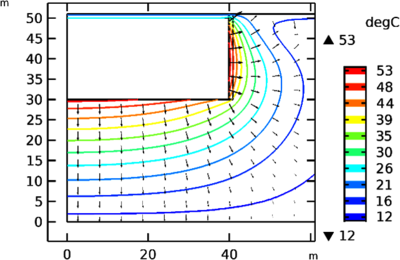
The integration of a Thermal Energy Storage (TES) system in District Heating (DH) networks allows increasing the share of renewables in the energy scheme, but it requires a proper pre-design phase in which the modelling of the TES system is adequately driven. The main purpose of this ... Read More

In this paper, we present a comprehensive study on the influence of anatomical shapes on the speed of blood flow in the left atrial appendage (LAA) using Computational Fluid Dynamics (CFD) Module in COMSOL Multiphysics®. The LAA itself can serve as a potential origin of blood clots, ... Read More
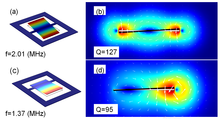
Viscous damping has a significant effect on dynamic performance of the resonators operating within fluid. This work is aimed to find the viscous damping for MEMS torsional paddle operating in air. Interaction of moving structure with the fluid requires a complicated and challenging ... Read More
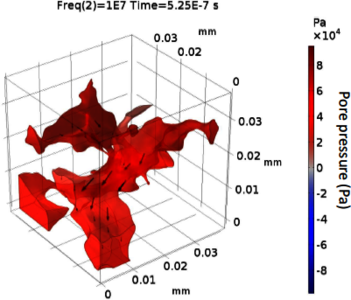
Digital rock physics (DRP) is an emerging field where a rock sample is imaged, relevant physical processes are simulated numerically on the digital rock sample, and the numerical solutions are used for understanding and interpreting the rock in different in-situ conditions. The use of ... Read More

Currently, there is a great interest in the study of gels, especially their transport or release properties. Hydrogels have countless definitions, but generally speaking, they are hydrophilic systems with a three-dimensional structure that tend to swell and hold large amounts of water ... Read More
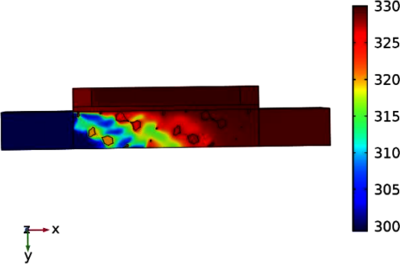
Metal foams are interesting materials with many potential uses. They are characterized by a cellular structure represented by a metal (or a metal alloy) and gas voids inside. A common metallic cellular material is a solid sponge, also known as open cell metal foam. Due to their intrinsic ... Read More
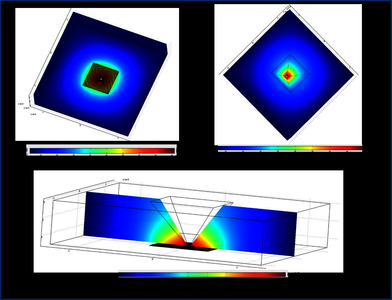
The development of microfluidic components for implementation of a lab-on-chip system requires both fluid movements under a controlled environment as well as sensitive detection. This work involves the design and simulation of micro-reactors with integrated heating as well as optical ... Read More
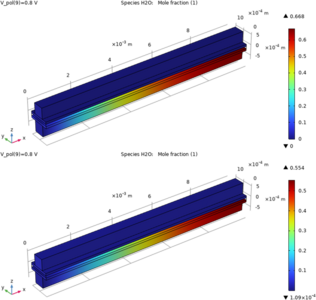
Dr Lathapriya1, Dr. Mishma S Stanislaus1, Dr Anand M Shivapuji2, Prof S Dasappa3 1 Research Scientist; 2 Senior Research Scientist; 3 Professor and Chair Interdisciplinary Center for Energy Research Indian Institute of Science; Bangalore - 560012 The motivation for this study arises ... Read More
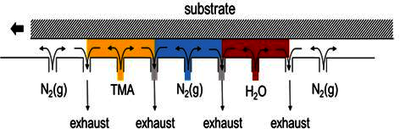
Atomic layer deposition(ALD) is one proven method to deposit ultra-thin films. ALD is advantageous for its atomic-level thickness control and conformity; leading to high quality films. Slow deposition rates for conventional ALD contribute to the impracticality of utilization of this ... Read More

Transdermal drug delivery is an emerging mechanism for continuous systematic solutions in medical healthcare problem. Transdermal drug delivery has significant advantages when compared to conventional methods such as oral administration or intramuscular injection. Most of the ... Read More


