
Explore the innovative ways multiphysics simulation is being used worldwide to advance research
Multiphysics modeling and simulation drives innovation across industries and academia — as is evidenced by the many uses showcased in the technical papers and posters presented by engineers, researchers, and scientists at the COMSOL Conference each year.
Draw inspiration from the recent proceedings collected below, or, to find a specific presentation or filter by application area or conference year/location, use the Quick Search tool.
View the COMSOL Conference 2025 Collection

The glow discharges in argon at pressures of 1 to 20 mTorr are modeling using COMSOL Plasma Module. DC glow discharge with secondary electron emission is compared to low pressure arc with thermionic emission. Boundary conditions on dielectric discharge tube walls are compared to that of ... Read More
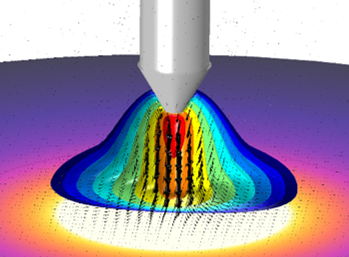
The heat and fluid flow calculation inside the melt pool in welding processes is a complex challenge. It can be useful to predict defects in the weld seam or to study the influence of some process parameters. Even if the required equations are mastered over the last few years, the cost ... Read More

Micro electrical discharge machining (MEDM), a scaled down version of EDM process, is a micro machining process used to fabricate micro holes and intricate shapes in electrically conductive materials irrespective of its hardness. In this process, an electric spark is generated in the gap ... Read More
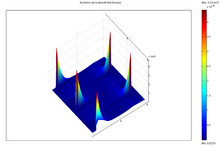
Excilamps are artificial Ultraviolet sources based on the emission of excimers or exciplexes. The latter are excited states of weakly bound rare gas or halide/rare gas atoms which emit a photon in the UV region when they dissociate. Dielectric Barrier Discharge (DBD) excilamps are ... Read More

The well known Pierce design of electron and ion diodes is the base of particle source extraction systems [1,2]. It was heavily studied up to 1960 with analog computing and it now offers us a known case against which to compare the precision of fluid and particle tracing codes. The ideal ... Read More
Svante Littmarck is the CEO of the COMSOL group. He co-founded COMSOL in 1986. He holds a M.Sc. in Applied Mathematics from the Royal Institute of Technology in Stockholm. In 2004 he received an honorary doctoral degree from the Royal Institute of Technology. Read More
Ed Fontes is CTO at COMSOL with specific interest in the transport-reaction products. He has 14 years experience of modeling transport phenomena in industry and 6 years of supervising research projects in Academia. Ed Fontes received his PhD in Electrochemical Engineering from the Royal ... Read More

Divertor is act as an exhaust for the nuclear fusion reactor. Main function of a divertor is to remove the heat flux from the plasma. Plasma facing components of the divertor are made up of Carbon (Graphite/CFC) and tungsten like materials[1]. Hence these materials are exposed to the ... Read More

This work uses COMSOL to simulate the Dielectric Barrier Discharge (DBD) lamp coupled to the external electrical circuit. The coupled system is modeled to capture the effect of the electrical parasitic elements on the efficiency of the DBD which is more realistic as compared to previous ... Read More

In this paper, detail magnetostructural analysis of fusion grade superconducting toroidal field coils that are used in ‘tokamaks’ is presented. The stresses that arise due to Lorentz forces in large size superconducting coils that carry high currents are of catastrophic type in nature. ... Read More


