
See How Modeling and Simulation Is Used Across Industries
Multiphysics modeling and simulation drives innovation across industries and academia — as is evidenced by the many uses showcased in the technical papers and posters presented by engineers, researchers, and scientists at the COMSOL Conference each year.
Draw inspiration from the recent proceedings collected below, or, to find a specific presentation or filter by application area or conference year/location, use the Quick Search tool.
View the COMSOL Conference 2025 Collection
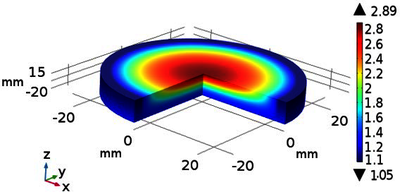
This paper presents a new design methodology of quasi-conformal transformation optics (QCTO) based modified Luneburg lens antennas using a broadband anti-reflective (AR) layer. The design used QCTO technique to modify portion of the lens’s spherical geometry into a flat surface for ... Read More
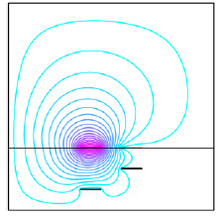
This paper presents the quasi-TEM two-dimensional (2D) approach for the analysis of multiconductor transmission lines interconnect in single and two-layered dielectric region using the finite element method (FEM). FEM is especially suitable and effective for the computation of ... Read More
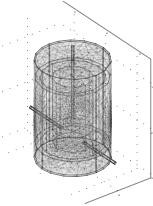
One of the primary reasons for large power fluctuations in smelting furnaces is loss of contact between the electrode and ore. Therefore one of the important aspects of controlling power fluctuations is a predictive algorithm for the positioning of the electrode. We propose a model ... Read More
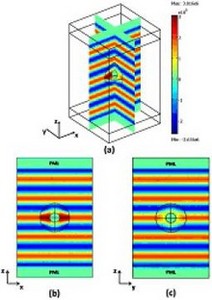
Plasmonic-based optical trapping is in its infancy and growing rapidly. Research in this area will significantly advance fundamental understanding in fields such as nanophotonics and biophotonics. Novel plasmonic trapping structures and systems can be designed and optimized using the ... Read More
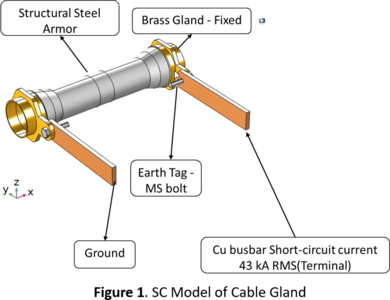
Cable gland is a strain relieving device, designed to attach and secure the end of an electrical cable to the equipment. In the event of short-circuit, large current shall pass through cable’s armour to the ground, keeping cable gland and equipment safe. Current weight of industrial ... Read More
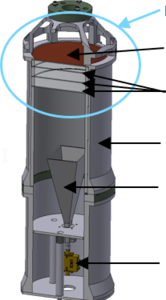
The nature of dark matter remains one of the most pressing puzzles in physics. The MAgnetized Disc and Mirror Axion eXperiment (MADMAX) is a dielectric haloscope dedicated to the search for QCD axion dark matter in the mass range of 40 - 400 µeV. The design of the experiment consists of ... Read More
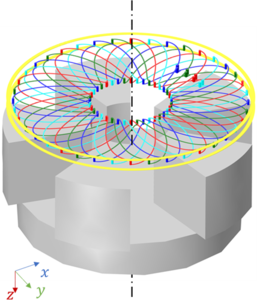
Modern electrical vehicle motors require a precise current control over the rotation of the rotor. These motors have high performance, but their control requirement impose a precise knowledge of the rotor angular position. Rotor position sensor (RPS) are traditionally designed using ... Read More
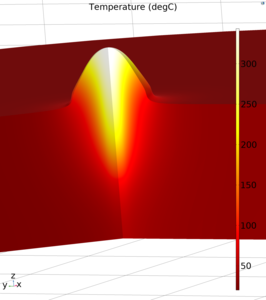
Micro-lenses with potential applications in optics on the surface of the various heavy-metal oxide glasses were created and studied experimentally [1-2]. Laser direct writing using continuous-wave laser emitting at 447 nm was successfully performed [2]. The aim of this study is to ... Read More
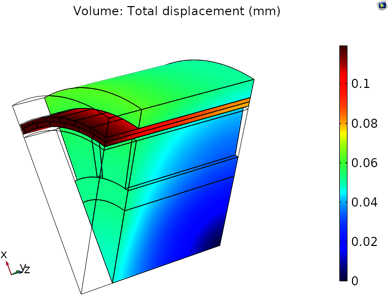
For the development of a Permanent Magnetic Synchronous Machine (PMSM), optimization of design variables, e.g. the size of an air gap, is performed. When applied to optical instruments in space environment, the motor has to be designed for ultra high vacuum (UHV) and cryogenic ... Read More
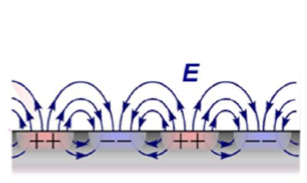
Surface plasmon polaritons (SPP) are guided electromagnetic modes of a metal/dielectric interface. These surface electromagnetic waves arise through the coupling of the incident electromagnetic radiation with the collective charge-density oscillations of the free electrons in a metal. ... Read More


