
See How Modeling and Simulation Is Used Across Industries
Multiphysics modeling and simulation drives innovation across industries and academia — as is evidenced by the many uses showcased in the technical papers and posters presented by engineers, researchers, and scientists at the COMSOL Conference each year.
Draw inspiration from the recent proceedings collected below, or, to find a specific presentation or filter by application area or conference year/location, use the Quick Search tool.
View the COMSOL Conference 2025 Collection

Introduction: The simulation of coupled heat and moisture transfer in constructions is becoming even more important in the last years. COMSOL Multiphysics represents a powerful tool for this kind of simulations as shown in [1,2,3], although applications in this area are still rare. For ... Read More

Low cost high energy density batteries that can be charged and discharged rapidly are required in a number of applications. Tapping energy from renewal resources such as solar, wind and tide requires rapidly generated energy to be first stored and then used round the clock. Storing ... Read More

The mesh is a key component in numerical simulations as it represents the spatial discretization of the model geometry. To accurately measure the variation of the unknowns, a relevant mesh should have a high density of degrees of freedom in regions where the norm of the gradient of the ... Read More

This poster presents a numerical modeling approach for hygrothermal behavior of bio-based materials. The mathematical model describes the heat and moisture transfer through a wall of bio-based materials. The studied wall is subjected to both convective heat transfer and moisture flux ... Read More

Reducing HVAC energy consumption in buildings has provoked a lot of thought and has, subsequently, drawn a lot of attention. Out of the several methods that have been introduced to achieve this goal, the usage of Phase Change Materials (PCMs) in the structural components is one of the ... Read More

Assessing the severity of the internal corrosion of structures is of paramount importance in the oil & gas industry. Modelling and simulation of this process proved to be key techniques to understand its mechanism and the main factors influencing its severity [1-4]. Considerable ... Read More
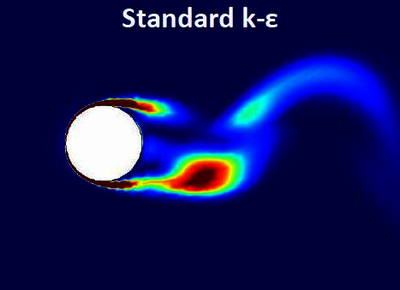
In the framework of the Austrian FFG project SaLüΗ!, a compact mechanical ventilation system with integrated micro-heat pump was developed. The aim was a high level of prefabrication and a compact design allowing for installation also in small flats, e.g. into the façade. Due to the ... Read More

Many materials require functionally graded cellular microstructures whose porosity is engineered to meet specific requirements of diverse applications. It has been shown in previous work that the bubble growth rate of a polymeric foam can be influenced by the surrounding acoustic ... Read More
The residual stresses developed in a stiffened panel manufactured using Electron Beam Freeform Fabrication (EBF3) process were studied. EBF3 process is a layer additive process that can be used to build near-net shaped parts directly using computer controlled techniques, which can be ... Read More
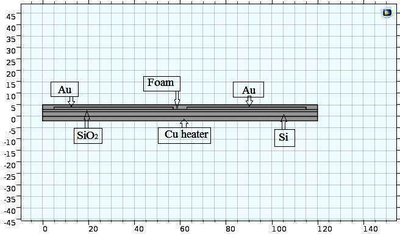
In this paper, a carbon dioxide sensor is introduced. At present many CO2 sensors are available, but they all required power in the order of few watts, therefore they are not suitable for long term unattended operation. This paper gives the brief description of CO2 sensor modeling using ... Read More


