
Explore the innovative ways multiphysics simulation is being used worldwide to advance research
Multiphysics modeling and simulation drives innovation across industries and academia — as is evidenced by the many uses showcased in the technical papers and posters presented by engineers, researchers, and scientists at the COMSOL Conference each year.
Draw inspiration from the recent proceedings collected below, or, to find a specific presentation or filter by application area or conference year/location, use the Quick Search tool.
View the COMSOL Conference 2025 Collection
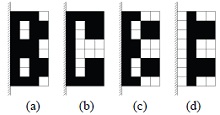
An automated design tool using COMSOL Multiphysics 3.5a and a genetic algorithm was developed to improve the performance of a MEMS resonant mass sensor. The device was comprised of a fixed-free poly-silicon micro-cantilever beam with electrostatic actuation and capacitive sensing. The ... Read More
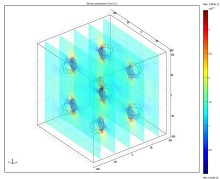
In this work, we present the effective properties of nanodielectrics with gold (Au) nanoparticles embedded in polymer (Polyvinyl Pyrrolidone (PVP)) matrix, calculated by using finite element method (FEM) based simulation in COMSOL Multiphysics software. Drude model is used to calculate ... Read More
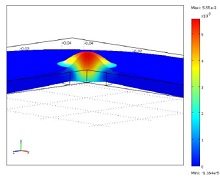
The prediction of mechanical response of assemblies during arc welding necessitates the knowledge of thermal history of the components and the constitutive behavior of the materials. COMSOL can simulate thermal and structural interaction but it needs to evaluate the time evolution of ... Read More
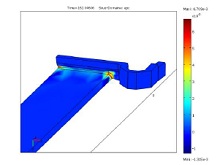
Nowadays, to go along with sustainable development and for cost matters, automotive heat exchangers are built with less and less aluminum and the process costs are being cut. However, the real mechanical response is a plastic shakedown, which is why we need to model the cyclic response ... Read More

In order to transmit energy in one direction, sonar flextensional transducers are combined into arrays of elements that are spaced a 1/4 wavelength apart. The directionality (front-to-back pressure ratio) is a modest of 6 dB. A single projector that is 1/3 wavelength in size and capable ... Read More
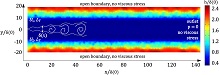
The finite element method applied to the k-epsilon turbulence model is used to investigate the two-stream turbulent mixing layer. Whereas the model is known as one of the most popular of the turbulence models to date, the model has yet to be applied to the classical mixing layer problem ... Read More

The multiphase flow of two immiscible liquids in a microchannel was investigated numerically. A Y-shape micromixer was designed to produce a pattern of slugs from the flowing liquids. The mass transfer characteristics of this flow pattern are of primary interest in this study. A simple ... Read More

Modernization of the High Flux Isotope Reactor (HFIR) thermal-hydraulic (TH) design and safety analysis capability is an important step in preparation for the conversion of the HFIR core from a high enriched Uranium (HEU) fuel to a low enriched Uranium (LEU) fuel. Currently, an important ... Read More
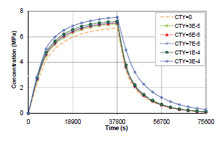
In this study, a 2-D model has been built using COMSOL Multiphysics® to analyze a triple coupled physics problem involving simultaneous gas diffusion, heat transfer, and structural mechanics in a pipe due to the flow of high-pressure carbon dioxide. The problem geometry and boundary ... Read More
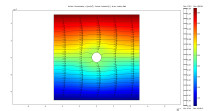
The paper presents and compares two models for simulating magneto-hydrodynamic flow of RedOx electrolyte in a conduit patterned with circular pillars. The first model solves the coupled Nernst-Planck and Navier-Stokes equations subjected to Butler-Volmer electrode kinetics and provides ... Read More


