
Explore the innovative ways multiphysics simulation is being used worldwide to advance research
Multiphysics modeling and simulation drives innovation across industries and academia — as is evidenced by the many uses showcased in the technical papers and posters presented by engineers, researchers, and scientists at the COMSOL Conference each year.
Draw inspiration from the recent proceedings collected below, or, to find a specific presentation or filter by application area or conference year/location, use the Quick Search tool.
View the COMSOL Conference 2025 Collection

Metal foams are interesting materials with many potential uses. They are characterized by a cellular structure represented by a metal (or a metal alloy) and gas voids inside. A common metallic cellular material is a solid sponge, also known as open-cell metal foam. Due to their intrinsic ... Read More
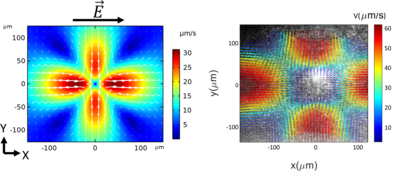
Efficient mixing and pumping of liquids at the microscale is a technology that is still to be optimized. The combination of an AC electric field with a small temperature gradient leads to a strong electrothermal flow that can be used for multiple purposes. Combining simulations and ... Read More

In recent years, Atomic Force Microscopy (AFM) has played a key role in the characterisation of surface structures and materials at the microscopic level. One of the most important aspects of AFM image analysis is the reliable provision of pore size and cross-linking rate data. AFM uses ... Read More
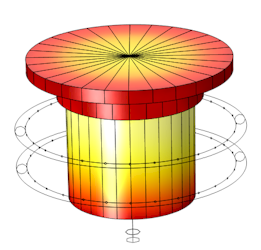
Bimetallic mechanical parts made of steel and bronze combine in an optimal manner the mechanical properties of the steel and the excellent anti-friction characteristics of the bronze. These properties make applications possible in various high-tech domains such as aviation, energy and ... Read More

Clayey soils and rocks are often used to secure contaminants, dissolved in the interstitial water, or fluids immiscible with water, because of their hydraulic properties (very low permeability and high water retention capabilities, see e.g. McCartney et al., 2016). However, their hydro ... Read More

As the demand for lightweight fibrous insulation materials in aerospace [1] and automotive [2] applications increases due to their benefits in reducing carbon footprints and costs [3], accurate prediction of thermal properties becomes crucial, particularly before production. The thermal ... Read More

Abdominal Aortic Aneurysms (AAAs) are balloonings of the descending aorta. Surgical intervention only occurs when the aneurysm growth exceeds a certain threshold, which is slightly different between men and women. Early-stage patients are often asymptomatic, and there is no prediction ... Read More

Freeze-drying is a widespread technology particularly suitable for heat-sensitive materials such as pharmaceuticals that could be damaged by the high temperature required by traditional drying treatments. A freeze-dryer is composed of two chambers: drying chamber and condenser, connected ... Read More

For the purpose of investigation the inertial behaviour of the crystalline lens, the COMSOL Multiphysics® software was used to create a 2D multi-physics model of the porcine eye globe, by using the Fluid-Structure Interaction (FSI). The geometry of the porcine eye model was adapted from ... Read More

Ultrasonic nondestructive testing (NDT) is extensively used in fields like medicine, oil and gas, and aerospace to inspect materials without causing damage. However, developing experimental setups and prototypes can be costly and time-consuming. This study employs advanced computational ... Read More


