
See How Modeling and Simulation Is Used Across Industries
Multiphysics modeling and simulation drives innovation across industries and academia — as is evidenced by the many uses showcased in the technical papers and posters presented by engineers, researchers, and scientists at the COMSOL Conference each year.
Draw inspiration from the recent proceedings collected below, or, to find a specific presentation or filter by application area or conference year/location, use the Quick Search tool.
View the COMSOL Conference 2025 Collection
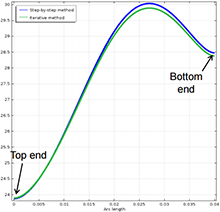
In inductive heating simulations the electromagnetic properties of the steel have a significant impact on the temperature pattern along the heated product. Indeed, taking into account the non-linearity of the ferromagnetic material properties is a key point to have relevant simulation ... Read More

Optical encryption has become a significant research field due to its remarkable advantages [1-5]. The unique features of plasmonics have drawn researchers’ attention towards the role which it can play in information security [3 & 4]. The electric field is greatly enhanced when a ... Read More

INTRODUCTION: A key parameter for electrical engines is the power density. High power density is particular beneficial for traction drives. Accordingly, optimizing power density is essential for competitive ability in the Formula Student Electric racing series [1]. The operating ... Read More
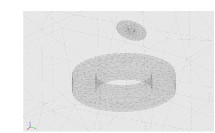
The Levitron offers an interesting demonstration of natural magnetic levitation using permanent magnets. It is composed by a small magnetized top and a circular magnetized base with a hole on its center. The top is placed in an area where magnetic field configuration and gyroscopic ... Read More

Cogging torque in permanent magnet motors and generators is characterized by a torque ripple. These torque fluctuations cause vibrations, noise and speed fluctuations. This paper presents finite element (FE) analyses results that show a previously unaddressed low frequency modulation of ... Read More

Vacuum window is required in the millimeter wave transmission line in ITER*. It is to be designed to minimize the microwave reflection while keeping a robust and safe approach to meet the requirements. We have studied transmission characteristics of various dielectric materials over D ... Read More
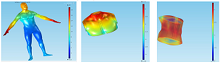
Microwave technology has provided with many exciting new therapeutic and diagnostic methods. Frequencies from RF as low as 400 kHz through microwave frequencies as high as 10 GHz are presently used for therapeutic applications in areas such as cardiology, urology, surgery, ophthalmology, ... Read More

INTRODUCTION: Researchers in the biomedical field have recently become interested in the potential applications of plasomics. Surface plasmon resonance based on optical properties of metallic nanostructures can be used for detection of special biological targets. Gold nanostructures with ... Read More

Organic light emitting diode (OLED) is an emerging technology for next-generation flat panel display and solid-state area lighting thanks to its many advantages such as light weight, low operating voltage, and flexibility, etc. A typical OLED has a multilayer structure that includes a ... Read More

Engineering design has long been dominated by orthogonal Cartesian principles. Nature inspired equation based mathematical surfaces are under renewed interest due to their innovative design potential and practical viability by 3D printing. In this paper, the parametric surface ... Read More


