
Explore the innovative ways multiphysics simulation is being used worldwide to advance research
Multiphysics modeling and simulation drives innovation across industries and academia — as is evidenced by the many uses showcased in the technical papers and posters presented by engineers, researchers, and scientists at the COMSOL Conference each year.
Draw inspiration from the recent proceedings collected below, or, to find a specific presentation or filter by application area or conference year/location, use the Quick Search tool.
View the COMSOL Conference 2026 Collection

Localized corrosion of aluminum alloys remains difficult to predict because conventional electrochemical measurements provide global information, whereas in-service risk is governed by the real morphology of the damage, including pit density, active surface area, local depth, ... Read More

High temperature vacuum furnaces typically operate at power levels of several hundred kilowatts and are generally equipped with rapid cooling systems to achieve the cooling rates required for heat treatment processes. However, the rear gas outlet and gas inlet nozzles, commonly in state ... Read More

Microwave heating is widely used in thermal therapies, particularly microwave ablation (MWA), because it enables rapid and volumetric heating of biological tissue. However, elevated temperatures can induce water evaporation, thermal damage, and substantial tissue shrinkage, potentially ... Read More

Physical Vapor Transport (PVT) remains the dominant method for the growth of high-quality silicon carbide (SiC) single crystals used in advanced semiconductor applications. The process involves strongly coupled heat transfer, mass transport, and phase transition phenomena under extreme ... Read More

Induction heating is increasingly adopted in manufacturing as a rapid and energy-efficient alternative to conventional furnace-based heating processes. In assembly applications, it enables localised, contactless heating of components to facilitate joining operations, significantly ... Read More

Open photoacoustic cells enable rapid gas exchange and continuous-flow operation but often suffer from reduced acoustic selectivity and increased susceptibility to external acoustic disturbances. In this work, we present a modified open photoacoustic resonator in which longitudinal slits ... Read More
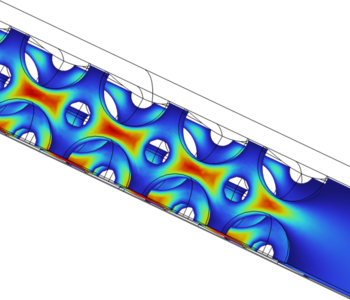
Hydrogen has long been recognized as an environmentally friendly and viable alternative fuel for powering vehicles or applications. Consequently, it is crucial to examine and assess different strategies as well as technologies, which support the hydrogen infrastructure. While hydro-gen ... Read More

Photovoltaic (PV) modules are exposed to harsh environmental conditions throughout their service life, including temperature fluctuations, humidity, wind loads, and solar irradiation. These stressors promote degradation mechanisms that reduce module efficiency and long-term reliability. ... Read More
Harvesting of waste heat and its conversion into electrical energy using thermo-electrochemical cells is an essential strategy for renewable energy development. Even substantial research has been devoted to these cells; their practical deployment remains limited by the cost of electrode ... Read More

Acoustic manipulation of cells offers a label-free, contactless method for a microfluidic platform for precise cell handling, cell analysis, investigation of cell–cell interactions, and 3D cell culture applications. With few exceptions, existing acoustic manipulation chips typically use ... Read More


