
See How Modeling and Simulation Is Used Across Industries
Multiphysics modeling and simulation drives innovation across industries and academia — as is evidenced by the many uses showcased in the technical papers and posters presented by engineers, researchers, and scientists at the COMSOL Conference each year.
Draw inspiration from the recent proceedings collected below, or, to find a specific presentation or filter by application area or conference year/location, use the Quick Search tool.
View the COMSOL Conference 2025 Collection

Liquid metals are foreseen as a multipurpose coolant in fusion blanket systems. However, the strongly magnetic environment of the fusion reactor hinders the regular flow of the liquid metal. It interacts with transverse magnetic field and produces a Lorentz force opposing the flow, ... Read More
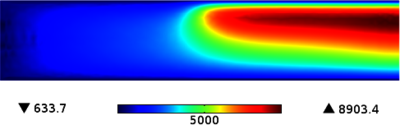
Microwave discharges have a wide range of applications, such as gas conversion, material processing and surface treatment; also they can provide an efficient way for dissociation of molecular gases as CO2 and N2O. Depending on the operating pressure and temperature, non-equilibrium ... Read More
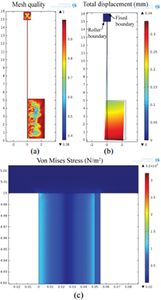
Mice are important animals used for biomedical research, and are widely used to study various disease models. When studying the behavior of mice and gathering biological data from them, miniature sensors and telemetry devices are needed. These devices must provide continuous monitoring ... Read More

We demonstrate the accuracy of the Finite Element Method (FEM) to characterize an arbitrarily shaped crossed-grating in a multilayered stack illuminated by an arbitrarily polarized plane wave under oblique incidence. To our knowledge, this is the first time that 3D diffraction ... Read More

In this study, magneto-rheological elastomer (MRE) composite beams made of Barium hexaferrite (BaM) and Iron (Fe) powders combined with a highly-compliant matrix material were simulated using COMSOL\'s Solid Mechanics and AC/DC modules. The goal of the work was to develop models capable ... Read More

Optical cavities play a major role in any spectroscopic setup. THz being invisible to normal human eye, designing a proper cavity for TDS setup becomes essential. Unlike the standard TDS setups for transmission geometry, the setups for reflection geometry is tricky in terms of alignment. ... Read More

COMSOL Multiphysics® is used to simulate the transport phenomena in arc welding of Nickel to 304SS. Electric Currents (ec) and Magnetic Fields (mf) are used to solve for the Lorentz force which is one of the volume forces. Laminar Flow (spf) is used to simulate flow field. The Lorentz ... Read More
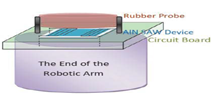
Despite of the existing successful clinical applications, however, the interaction, i.e. artificial sensing, between the robot and the patient is still very limited. With the help of various cameras, vision is almost the only feeling that a robot can have. In order to imitate the human ... Read More
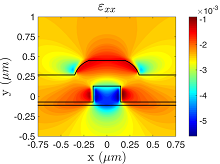
The recently discovered Pockels effect in strained silicon has made silicon a promising candidate material for optical modulators and switches. In this work, we propose a model that links the electro-optic effect to the applied strain (in fact to the strain gradient). This model may be ... Read More
RF propagation modelling in (30 – 1000 MHz) SAR region for predicting the location and intensities of constructive interference patterns within rectangular confined spaces using waveguide theory and ray tracing techniques. Read More


