
Explore the innovative ways multiphysics simulation is being used worldwide to advance research
Multiphysics modeling and simulation drives innovation across industries and academia — as is evidenced by the many uses showcased in the technical papers and posters presented by engineers, researchers, and scientists at the COMSOL Conference each year.
Draw inspiration from the recent proceedings collected below, or, to find a specific presentation or filter by application area or conference year/location, use the Quick Search tool.
View the COMSOL Conference 2026 Collection

It has already been demonstrated that fluid models can be used to simulate two-dimensional axisymmetric inductively coupled plasma via implementation in the COMSOL (multi-physics simulation software) platform. In this study, we improved the model and simulated a large scale magnetized ... Read More

Damages caused by lightning overvoltages remains to be an important issue for electrical industry, putting limitations for efficiency of transmission and distribution of electrical energy. Modern solutions for lightning protection such as multichamber arresters (MCA) for overhead ... Read More

Metal-organic chemical vapour deposition (MOCVD) is a well-known process to produce high quality thin films that can protect, ennoble and functionalize metallic tools. To realize a high performance coating on a complex 3D mold surface, knowledge about the material formation from a ... Read More
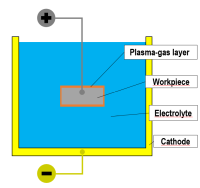
Plasma electrolytic polishing (PeP) is an electrochemical method for surface treatment. In detail PeP is a special case of anodic dissolution [1] that unlike electrochemical polishing requires higher voltage and uses environment friendly aqueous solutions of salts. When the process ... Read More
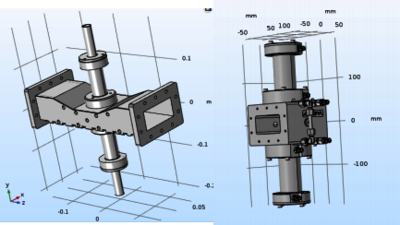
Plasma gasification of biomass is emerging as an efficient way to reduce the carbon foot print of waste management while generating renewable energy. In general, gasification is a process where electromagnetic wave energy is used to heat biomass sufficiently to convert the bio-mass to ... Read More
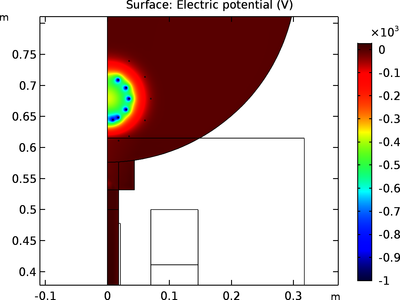
The Helicon Injected Inertial Plasma Electrostatic Rocket (HIIPER) is an electric space propulsion concept to generate denser ion and electron beams using inertial electrostatic confinement (IEC) fusion theory and helicon source. Helicon source is employed to generate the plasma and the ... Read More

The radio-frequency(RF) plasma sources have shown great potential in various industrial applications such as thin coatings deposition and polymers modification[1,2]. Physics of low pressure RF plasmas has been investigated significantly[3]; however, this kind of plasma source is rarely ... Read More

Today’s driver hardware for High-intensity discharge (HID) lamps is bulky, expensive and not particularly energy-efficient. A downscaling of the devices seems possible by increasing the operation frequency from typically 400 Hz to some hundred kilohertz. However, efforts to design high ... Read More


