
Lorenzo Bortot, CERN, Switzerland
Engineers and physicists at CERN go to great lengths to ensure that the high-power superconducting magnets that maintain the circular trajectory of particles inside the Large Hadron Collider (LHC) do not revert to a resistive state, an event known as a quench. To understand and prevent quench events, Lorenzo Bortot, an electrical engineer and research fellow at CERN, used numerical simulation to develop a multiphysics, multiscale, and multirate representation of the electrodynamics and thermal evolution of a quench event.
Suggested Stories
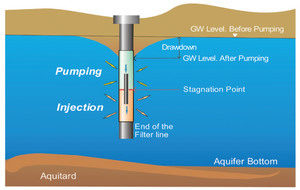
Pumping and Injecting from a Single Borehole
Professor Dr. Martin Sauter leads a group at the University of Göttingen in research on hydrogeology. Cooperating with ...
Multiphysics Simulation Drives Smart City Technology
Traditional power boxes are bulky and too large. To design a power box that is more space-conscious, modular, and ...
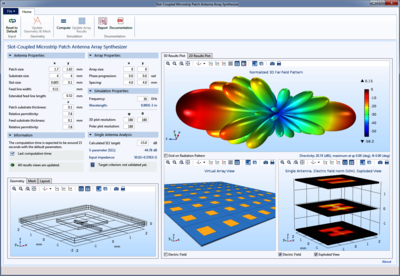
Communicating from Space: The Front End of Multiscale Modeling
As satellites and astronauts travel further out in space, the more communication challenges they are faced with. This ...
Helicon Antenna Supports Nuclear Fusion
Built by engineers at General Atomics, the DIII-D tokamak needs to achieve temperatures that are 10 times hotter than ...


