
Fraunhofer ISE Optimizes Climate Control Systems with Simulation
Eric Laurenz, Hannes Fugmann, Fraunhofer ISE, Germany
Adsorptive climate control systems can reduce the power required to heat and cool buildings by running primarily on waste heat, natural gas, and solar thermal energy instead of electricity. While adsorption-based chillers, heat pumps, and thermal storage units are available commercially, they need to be more efficient, compact, and cheaper to produce in order to be available on a larger scale.
Researchers at the Fraunhofer Institute for Solar Energy Systems (ISE) use numerical simulation and experimentation to better understand and design heat exchangers for adsorption systems, including wire-based structures with high surface areas. Using COMSOL Multiphysics® software, the research team captured the dynamics of the adsorption and desorption processes that release heat into buildings. Their work entails modeling water vapor and heat transfer through porous structures, such as sorbent, as well as isothermal fluid flow and heat transfer through solids, to achieve an optimized exchanger geometry.
Suggested Stories
Adding Quantitative Systems Pharmacology to Pharmaceutical Science Curriculum
The FDA is encouraging pharmaceutical companies to include simulation in their product development cycles, so ...
Complex Fenestration System for Energy Efficiency
Fenestration systems can greatly impact the energy efficiency of buildings. Eurac Research is using simulation to ...

Characterizing Piezoelectric Sensors for Nondestructive Testing
Piezoelectric sensors must be carefully designed and calibrated. Simulation can help make this process more ...
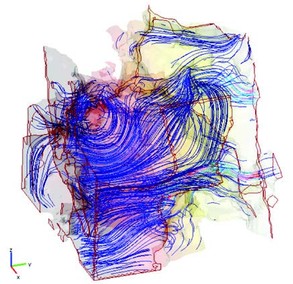
Analysis and Simulation of Rock Properties
VSG provides high-performance 3D visualization toolkits and software for a number of industries, including materials ...


