
General Atomics Designs Helicon Antenna for Tokamak with Simulation
Humberto Torreblanca, General Atomics, USA
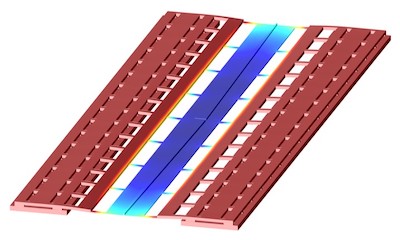
Built by engineers at General Atomics, the DIII-D tokamak needs to achieve temperatures that are 10 times hotter than the core of the Sun to achieve nuclear fusion. To accomplish this, a novel heating system using a helicon antenna that can inject 1 megawatt of RF power is being designed and built. Humberto Torreblanca, the DIII-D tokamak chief operator, and his team are using multiphysics simulation to model all aspects of the design, such as the magnetic field distribution inside and outside the tokamak vessel as well as the electric field distribution and RF losses of the helicon antenna.
Suggested Stories
Designing a Silicon Photonic MEMS Phase Shifter with Simulation
Researchers at the Swiss Federal Institute of Technology Lausanne are using simulation to optimize the optical and ...
Boost Sales and Build Stronger Relationships with the Deployment of Simulation Apps
Proofs of concept are often the deciding factor in gaining the trust of a customer and generating a sale. But for high ...
Meeting Quality Standards in Oil and Gas Extraction with Ultrasonic Transducers
Baker Hughes saves 30% on prototyping costs by using 3D ultrasonic simulations to optimize transducers used for ...
Battery Simulation Propels Electric Cars in China
Dr. Songrui Wang is a researcher at The Tianjin Institute of Power Sources, involved in battery testing and evaluation ...


