
Using Simulation to Rapidly and Precisely Model Nanoresonators
J. Yang, M. Perrin, P. Lalanne
CNRS, France
Nanoresonators, or optical nanoantennas, manage the concentration, radiation, and absorption of light at the nanometer scale and show stunning promise for future improvements to technology, such as sensors, computers, and other electronics. However, the ways that these devices scatter light and interact with their surrounding environment are not well understood, nor are the electromagnetic properties of the complex metal shapes that comprise them. Numerical approaches to calculating the resonance modes and excitations in nanoresonators have historically been cumbersome and error-prone.
Now, researchers and engineers at Institut d’Optique d’Aquitaine (Paris, France) are using COMSOL Multiphysics simulations to rapidly and precisely determine physical properties, calculate the resonance modes, and analyze the electromagnetic fields and scattering that occur due to excitation. They expect that their new approach to modeling these nanoresonators will lead to advancements in the development and use of nanoelectromechanical devices (NEMS) for a wide range of applications such as photovoltaics, spectroscopy, and improved electronic systems.
Suggested Stories
3D Modeling of Armor Losses in High-Voltage Cables
NKT HV Cables used numerical modeling to investigate electromagnetic fields and calculate armor losses in 3D cable ...
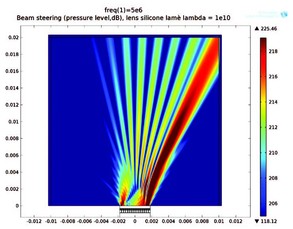
Optimizing Ultrasound Piezo-disk Transducers
Esaote S.p.A. produces medical diagnostic systems, including the manufacturing and sales of ultrasound imaging ...
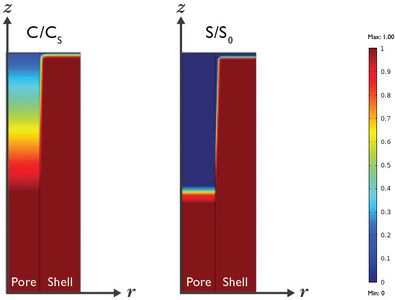
Simulating the Release Mechanism in Drug-Eluting Stents
Stent insertion through the coronary artery is a common procedure used to treat restricted blood flow to the heart ...

Numerical Simulation-Based Topology Optimization Leads to Better Cooling of Electronic Components in Toyota Hybrid Vehicles
The Toyota Research Institute in Ann Arbor drives cutting-edge research in energy efficiency, mobility infrastructure, ...


