
Knowles Uses Simulation to Optimize Hearing Aid Performance
Brenno Varanda, Knowles Corporation, Illinois, USA
Nearly 20% of the United States population has some degree of hearing impairment. Despite the relative inconspicuousness and perceived simplicity of hearing aids, their development involves complex, time-consuming, and computationally expensive research. The hearing aid industry is in dire need of a simplified model that can expedite the design process and provide options to consumers quicker. Engineers at Knowles Corporation have achieved this using COMSOL Multiphysics®. Employing a simplified “black box” circuitry model of a receiver coupled to a model of the vibroacoustic system, they drastically reduced the time it takes to optimize performance and bring a prototype to market.
Suggested Stories

Developing Better Resonators for CMOS Technology
Sub-GHz technologies are used by the billions for home automation, infrastructure monitoring, and more. This growing ...

Numerical Simulation-Based Topology Optimization Leads to Better Cooling of Electronic Components in Toyota Hybrid Vehicles
The Toyota Research Institute in Ann Arbor drives cutting-edge research in energy efficiency, mobility infrastructure, ...
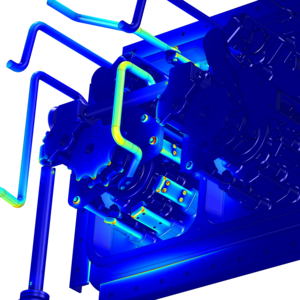
Dielectric Stress Simulation Advances Design of ABB Smart Grid-Ready Tap Changers
Consumers of power rely on fairly stable voltages. Transformers contain tap changers which vary the ratio of secondary ...
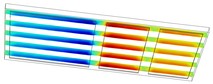
Modeling the Electrochemistry of Blood Glucose Test Strips
Lifescan Scotland is a medical device company that designs and manufactures blood glucose monitoring kits for the ...


