
Researchers Use Simulation to Test Implantable Hearing Devices
Patrik Kennes
Cochlear Technology Centre, Mechelen, Belgium
Cochlear Technology Centre Europe (CTCE) develops new technology for hearing implants. Their current work is with a new type of hearing implant, a Direct Acoustic Cochlear Implant called CodacsTM. This product imposes structural, pressure waves directly to the cochlea, stimulating it this way, as opposed to amplifying sound.
Using COMSOL Multiphysics, the team was able to test the many different characterics of the device, and physical phenomena affecting it. This included the structural, acoustics, electromagnetic, and piezeoelectric properties and design of the implant. Their analyses saved the team from a costly trial-and-error approach and permitted them to optimize their new technology using the one simulating technology on the one uniform platform.
Codacs is a trademark of Cochlear Ltd.
Suggested Stories

Modeling Inertial Focusing in Straight and Curved Microfluidic Channels
In many medical procedures and tests, it is necessary to isolate cells of interest for further analysis. Microfluidics ...
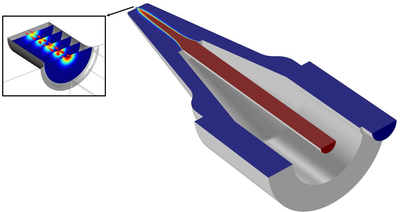
Optimizing Hematology Analysis: When Physical Prototypes Fail, Simulation Provides the Answers
Hematology analysis, the analysis of a blood sample to determine a variety of hematological parameters, is a major ...
Precision Performance: The Pursuit of Perfect Measurement
Brüel & Kjær, a manufacturer of transducers, microphones, and other instruments and software for sound and ...
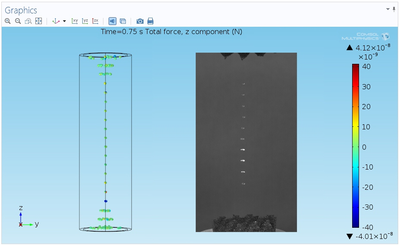
Floating on Sound Waves with Acoustic Levitation
As part of an industry that saves lives on a regular basis, pharmaceutical companies are in need of systems that can ...


