
J. Knox, R. Coker
NASA Marshall Space Flight Center, AL, USA
To ensure astronaut safety on space missions, it is necessary to routinely revitalize the atmosphere in manned spacecraft. Jim Knox, Rob Coker, and a team of engineers at the NASA Marshall Space Flight Center have developed a water-saving system called an Isothermal Bulk Dessicant (IBD). The IBD is used to collect water from the atmosphere for re-use. It consists of packed beds lined with silica gel; as air flows through, water is adsorbed onto the silica gel and then transferred back to the atmosphere through desorption once the air has continued on to a CO2 removal system. Using a COMSOL Multiphysics model, Knox and Coker simulated the gas flow and heat transfer in a four-bed IBD. They tracked the flow rates, pressure conditions, and water concentration as water adsorbed and desorbed. Their model predicted that the IBD successfully saved 85% of the water from the atmosphere. As they use COMSOL to optimize their designs, they hope to offer NASA integrated systems that will enable farther space travel than ever before.
Suggested Stories
Magnetic Transmissions Increase Lifespan of Offshore Wind Farms
Sintex is a developer and manufacturer of magnetic couplings, systems that transmit torque and power with ...
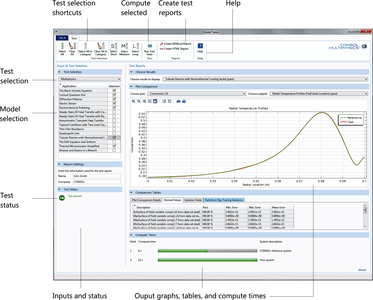
Nuclear-Safety-Related SQA Procedure Automation with Custom Applications
In an environment as highly regulated and potentially dangerous as the nuclear industry, software quality assurance ...
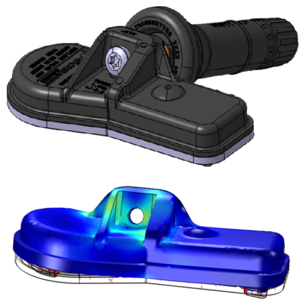
Optimizing Built-in Tire Pressure Monitoring Sensors
Built-in tire pressure sensors need to be able to withstand the wear and tear of working within a car’s tire rim. ...
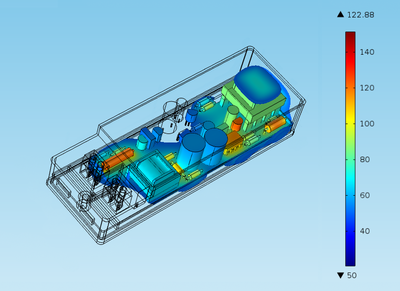
Keeping LEDs Cool Gets More Manageable Through Simulation
Light-emitting diodes (LEDs) offer many benefits over incandescent lighting, such as long life spans and high luminous ...


