
Francesca Magionesi
INSEAN
Italy
There has been a recent move towards utilizing bulbous bows on ships to house different types of sonar systems, but it is not definite how much structural vibration might interfere with the functioning of a transducer array inside the sonar dome. INSEAN, the National Institute for Studies and Experiments of Naval Architecture in Italy, needed a way to simulate what is happening when the turbulent boundary layer interacts with the bulbous bow in order to determine how much self-noise this creates.
They first created a small-scale model to capture the turbulent boundary layer excitation and that gave them a full-scale fluid load expression. They then created a full-scale model within COMSOL Multiphysics, taking the complexity of the composite material used for the bulbous bow and the turbulent boundary layer load into account. LiveLink™ for Pro/ENGINEER® enabled the team to bring CAD data for the different parts of the bulbous bow into COMSOL Multiphysics.
Suggested Stories
Keynote: The Role of FEA Simulations in Electrifying Aviation
In this keynote talk, Mustafa Baris Topçuoglu discusses aerospace company GKN Fokker Elmo's research- and customer ...
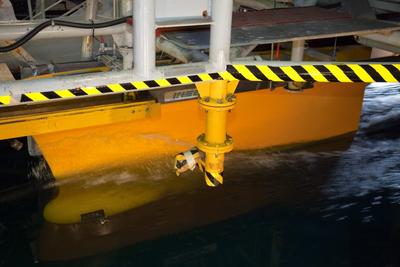
Sonar Dome Vibration Analysis
There has been a recent move towards utilizing bulbous bows on ships to house different types of sonar systems, but it ...

A 3D Model Helps Scientists Predict Thermal Behavior of the Moon
A first-of-its-kind thermophysical model was built by researchers at the Physical Research Laboratory to better ...
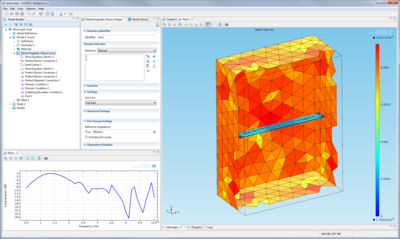
Picking the Pattern for a Stealth Antenna
Stealth airplanes and ships avoid radar detection by optimizing the shape of surfaces to reflect away from the radar ...


