
In accordance with our Quality Policy, COMSOL maintains a library of hundreds of documented model examples that are regularly tested against the latest version of the COMSOL Multiphysics® software, including benchmark problems from ASME and NAFEMS, as well as TEAM problems.
Our Verification and Validation (V&V) test suite provides consistently accurate solutions that are compared against analytical results and established benchmark data. The documented models below are part of the COMSOL Multiphysics® software’s built-in Application Libraries. They include reference values and sources for a wide range of benchmarks, as well as step-by-step instructions to reproduce the expected results on your own computer. You can use these models not only to document your software quality assurance (SQA) and numerical code verification (NCV) efforts, but also as part of an in-house training program.
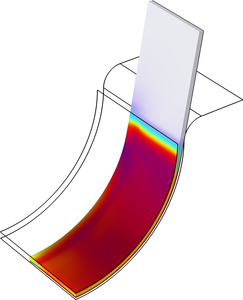
This example benchmarks a NAFEMS validation model of a friction contact problem with an elastoplastic material model. A thin metal sheet is forced into a die by a punch. Both the compressing displacement and the release of the punch are modeled in order to compute the forming angle (at ... Read More
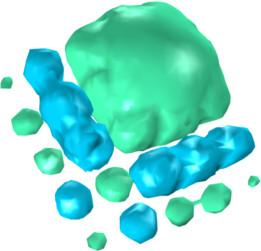
The Bessel panel is a way to arrange a number of loudspeakers so that the angular sound distribution resembles that of a single speaker. This model combines five Bessel panels in the same pattern to approximate a purely radial sound field. The speakers are driven with different ... Read More
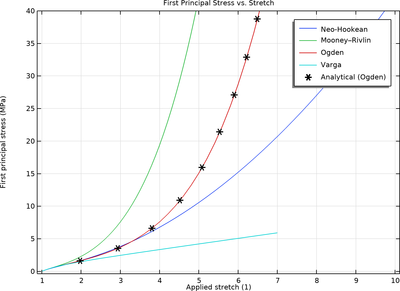
This model demonstrates the inflation of a rubber balloon with four different hyperelastic material models. The results are compared with the analytical solution for a thin-walled, spherical vessel. Controlling the inflation of hyperelastic balloons is important in clinical ... Read More
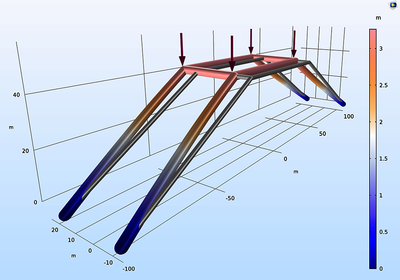
This model illustrates the instability of a space arc frame under concentrated vertical loading. The Beam interface is utilized. Two different approaches are used: A full incremental nonlinear analysis, where a small lateral load is applied to break the symmetry of the structure A ... Read More
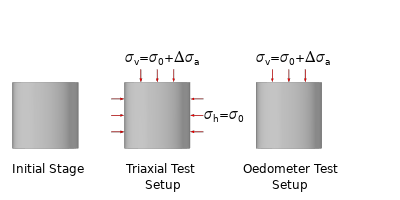
In this example, triaxial and oedometer tests are simulated using the Modified Cam-Clay material model. A nonlinear stress-strain relation is recovered with the constant Poisson's ratio formulation. The hardening and softening behavior is recovered for normally consolidated and highly ... Read More
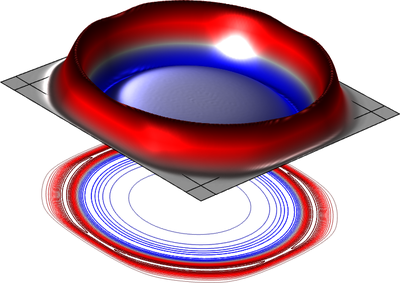
This tutorial simulates a standard test and benchmark model for perfectly matched layers (PMLs) as absorbing boundary conditions in the time domain. It involves the propagation of a transient Gaussian pulse with no flow. The Pressure Acoustics, Transient interface is used together with ... Read More
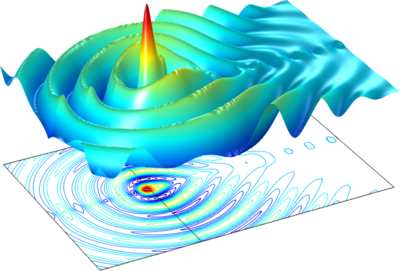
This is a benchmark model for the linearized Euler interface of the Acoustics Module. The model is from the NASA "Fourth Computational Aeroacoustics (CAA) Workshop on Benchmark Problems (2004)". The model results are compared to an analytical solution by Agarwal et al. (AIAA Vol. 42, No. ... Read More
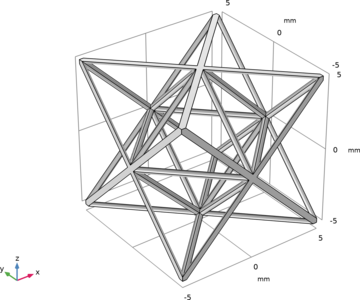
Lattice materials enable the creation of advanced additive manufacturing materials with customized mechanical properties. At the macroscopic level, these heterogeneous materials can be modeled as homogeneous materials. Homogenization techniques can accurately determine the material's ... Read More
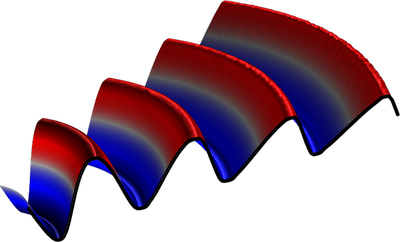
This model example shows how to model nonlinear propagation of a cylindrical wave using the Nonlinear Pressure Acoustics, Time Explicit physics interface available in Acoustics Module of COMSOL Multiphysics. The interface implements the system of nonlinear acoustic equations in the form ... Read More
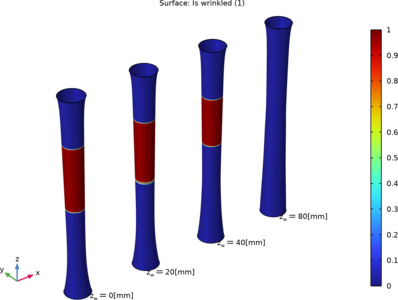
In this example, wrinkling is studied in a cylindrical membrane of nonuniform thickness under axial and pressure loading. The membrane is modeled as an incompressible Mooney–Rivlin material. During axial stretching, certain portions of the membrane undergo wrinkling; however, the ... Read More


