
Explore the innovative ways multiphysics simulation is being used worldwide to advance research
Multiphysics modeling and simulation drives innovation across industries and academia — as is evidenced by the many uses showcased in the technical papers and posters presented by engineers, researchers, and scientists at the COMSOL Conference each year.
Draw inspiration from the recent proceedings collected below, or, to find a specific presentation or filter by application area or conference year/location, use the Quick Search tool.
View the COMSOL Conference 2025 Collection

Dr. Bernardi is a Research Engineer with Ford Motor Company in Dearborn, MI. Her research focuses on the analysis and simulation of electrochemical energy-storage and conversion systems. In particular, Dr. Bernardi develops mathematical models that predict system behavior and identify ... Read More
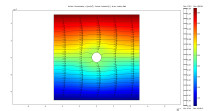
The paper presents and compares two models for simulating magneto-hydrodynamic flow of RedOx electrolyte in a conduit patterned with circular pillars. The first model solves the coupled Nernst-Planck and Navier-Stokes equations subjected to Butler-Volmer electrode kinetics and provides ... Read More

In this paper we present a study of the time dependent analysis of a metal hydride bed (MHB) which provides constant flow to a fuel cell at required power loading and pressure. The hydrogen gas phase pressure, the hydrogen concentration in the metal hydride and the hydrogen desorption ... Read More
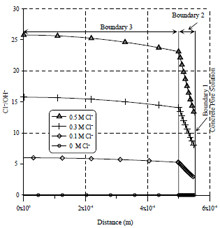
Corrosion of rebar in concrete is one of the most prominent durability problems in reinforced concrete, especially where de-icing or seawater salts come into contact with the structures. Previous electrochemical and microscopic investigations have shown that local crevices between the ... Read More

Flow, concentration and temperature fields are studied with numerical and experimental methods inside a scaled-up fuel cell anode channel model. The low aspect ratio channel has a porous medium as the inferior wall where a mixing of different pH solutions occurs. Chromatic change of ... Read More

Models that describe hydrogen permeation through a thin TiO2 film deposited on Pd have been developed based on a mass-balance equation consisting of diffusion, reversible hydrogen absorption/desorption, and irreversible hydrogen trapping. These models are solved by the finite element ... Read More

Over time, rechargeable batteries degrade and eventually stop working. You see some combination of declining capacity, rapid self-discharge, and reduced power. Degradation mode depends on battery design, but also on the application. Often, multiple physical processes contribute to ... Read More

Polymer electrolyte membrane (PEM) fuel cells have attracted attention as an alternative power source in various applications such as vehicles, portable supplies, and stationary power systems. A non-isothermal PEM fuel model is developed and simulated by using COMSOL Multiphysics. ... Read More

Enzymatic biofuel cells (EBFCs) are miniature implantable power sources, which use enzymes as catalysts to perform redox reaction with biological fuels such as glucose. In this study, we focused on a three dimensional EBFC chip with highly dense micro-electrode arrays, fabricated by ... Read More
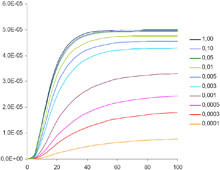
Hydrogen Embrittlement (HE) is one of the mechanisms responsible for premature failure of structures. In the context of environmental sustainability, it is compelling to improve or conceive new processes and/or new materials capable of reducing fracture induced by HE. We analyzed the ... Read More


