
See How Modeling and Simulation Is Used Across Industries
Multiphysics modeling and simulation drives innovation across industries and academia — as is evidenced by the many uses showcased in the technical papers and posters presented by engineers, researchers, and scientists at the COMSOL Conference each year.
Draw inspiration from the recent proceedings collected below, or, to find a specific presentation or filter by application area or conference year/location, use the Quick Search tool.
View the COMSOL Conference 2025 Collection

Design of the Pressurized Water Reactors (PWRs) involves extensive calculations to verify the reactor safety criteria such as power peaking factor during the reactor lifetime. Coupling of neutronic calculations, thermal hydraulic calculations and other reactor phenomena requires a ... Read More

Present work is done in the framework of the SisAl Pilot EU project, which aims at optimising the silicon production in Europe by recycling materials and using a carbon-emission friendly technology. The silicon production experiments are conducted on laboratory and pilot scales in ... Read More

叶片复合材料层的击穿是风电机组遭受雷击后的主要故障形式。对于低电导率的GFRP类叶片铺层而言,雷电先导作用下的强背景电场造成的电击穿可能先于回击电弧的热效应产生。为了获得GFRP铺层的电击穿机理,基于COSMOL Multiphysics软件,建立了引下线-GFRP铺层的流注放电数值仿真模型。考虑了空气域与介质层内部的粒子输运,以及气-固分界面上的电荷沉积与注入作用。通过“稀物质传递物理场” 模块、“静电物理场”模块、“边界常微分和微分代数” 模块以及“稳定对流-扩散方程接口” 模块对控制方程进行求解。依据电场梯度分布进行了网格加密与时间步设置 ... Read More

A power supply is generally used in many electrical devices. In order to deliver uniform power irrespective of time variation, most plasma equipment also uses a power source. Therefore, the power condition in plasma simulations is essential. In time-dependent models using a current ... Read More

Microreactors have gained popularity in fuel production industry. This is due to its high surface area to volume ratio, enhanced mass and heat transfer, short residence time and a more sustainable practice. The catalytic hydrodeoxygenation (HDO) reaction of 4-Propylguaiacol (4PG) to 4 ... Read More

Electrochemical reduction of CO2 to value added chemicals is a promising strategy to mitigate its emission from atmosphere and close the carbon cycle. Although the knowledge on designing electrocatalysts for CO2 electroreduction exists, challenges are associated with developing CO2 ... Read More
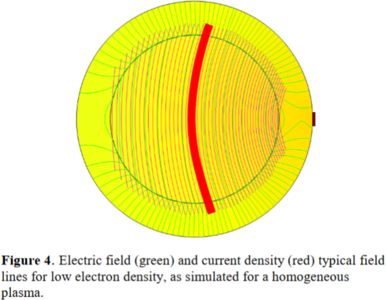
Exciting plasma in inductive mode is attractive due to the high electron density and the absence of ion interaction with the reactor walls. However, any real system excites plasma at low power in capacitive mode with strong interaction with the walls. The transition from one mode to the ... Read More

Stirred tank bioreactors are used to simulate a natural biochemical environment for the optimum growth of cells (i.e. algae, microorganisms or tissues) in microbial and cell culture. Bioreactor types range from small (5 L and less) up to 15000 L systems for large-scale industrial ... Read More

The IR CO2 laser powered chemical conversions in the gas phase are intriguing and the researchers’ attention was focused on this transformation a while ago. The method, known as Infrared Laser Powered Homogeneous Pyrolysis, or IR LPHP opened reaction pathways not reached by conventional ... Read More

A micro steam methane reformer is a complex product consisting of multiple units. For the virtual functional product development it is necessary to validate these sub models separately. Therefore a reactor was designed to analyse kinetics of chemical reactions. The reactor design is ... Read More


