
See How Modeling and Simulation Is Used Across Industries
Multiphysics modeling and simulation drives innovation across industries and academia — as is evidenced by the many uses showcased in the technical papers and posters presented by engineers, researchers, and scientists at the COMSOL Conference each year.
Draw inspiration from the recent proceedings collected below, or, to find a specific presentation or filter by application area or conference year/location, use the Quick Search tool.
View the COMSOL Conference 2025 Collection

Biomechanics of bone has drawn major concern in research due to social and economic demand. In real life, trabecular bone is subjected to multiaxial stresses during routine physiological loading. Fatigue failure of the bone accounts for various clinical implications, thus studies and ... Read More
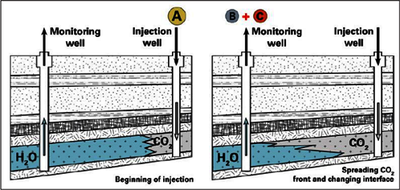
The kinetic interface-sensitive tracers (KIS tracers) are used to give a partial picture of the spreading, mixing and plume migration of supercritical carbon dioxide (scCO2) in the deep saline aquifer by estimating the interfacial areas between scCO2 and brine during the injection of ... Read More

The Geoenvironmental Engineering Group of the University of Castilla-La Mancha is developing a computational tool, M4B, for describing the influence of environmental loads on the deformation behavior of soils and its interaction with building foundations. This tool comprises a set of ... Read More

We use COMSOL Multiphysics to solve time-dependent optimal control problems for partial differential equations whose optimality conditions can be formulated as a PDE. For a class of linear-quadratic model problems we summarize known analytic results on existence of solutions and first ... Read More
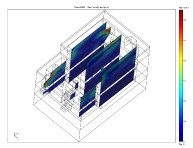
This paper presents and discusses the first phase results of a wide ranging project concerning the study and prediction of the efficiency and energy performances of natural ventilation systems existing inside historic buildings. The air flow patterns, air temperature and air velocity ... Read More

Lithium-sulphur (Li-S) batteries have the potential to surpass the energy storage capability of Li-ion batteries due to their high theoretical gravimetric energy density of 2700 Wh/kg. However, the processes which drive the system behaviour are much more complex than those in a Li-ion ... Read More
Capacitive deionization (CDI) is a desalination technology which is based on the storage of ions in the electrical double layer of a pair of oppositely polarized porous carbon electrodes, which are usually assembled using activated carbon particles (Figure 1). It is efficiently deployed ... Read More

A wide variety of near-field optical phenomena such as apertureless near-field scanning microscopy (ANSM) at optical and terahertz (THz) regimes and surface enhanced Raman scattering relies on the electric field enhancement at the end of a sharp tip. Achieving and controlling this ... Read More
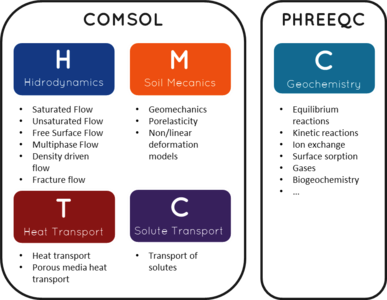
Reactive transport models (RTM) that couple physical and chemical processes are commonly used to solve a large variety of problems in the environmental industry. There are a series of codes designed to solve this kind of problems. However, their use requires typically much effort due to ... Read More

Encapsulation is an established technique to protect sensitive materials from environmental factors such as oxygen and light. Nutritionally beneficial fatty acids like omega 3 fatty acids are susceptible to oxidation and are therefore encapsulated by drying an oil in water emulsion. It ... Read More