
Explore the innovative ways multiphysics simulation is being used worldwide to advance research
Multiphysics modeling and simulation drives innovation across industries and academia — as is evidenced by the many uses showcased in the technical papers and posters presented by engineers, researchers, and scientists at the COMSOL Conference each year.
Draw inspiration from the recent proceedings collected below, or, to find a specific presentation or filter by application area or conference year/location, use the Quick Search tool.
View the COMSOL Conference 2025 Collection
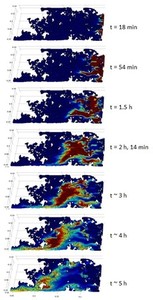
We apply COMSOL Multiphysics for reproducing our experimental observations of fluid flow and transport processes in geological media. Our experimental GeoEPT-method allows the 4D monitoring of transport processes in geological material on laboratory scale. Explicitly we import ... Read More

The subsurface thermal structure in presence of groundwater recharge/discharge has been obtained by applying the Robin type boundary condition at the earth’s surface. The Robin type boundary condition involves the effect air temperatures at the surface which are taken as exponentially ... Read More

This paper describes the design and characterization of an 8 slots resonant cavity Magnetron, which undergoes thermal-structural effects due to cathode heating. The proposed study involves Thermal Stress, Eigen-frequency and Particle Tracing analysis based on COMSOL Multiphysics®. ... Read More

Electrofluidic transport through a single walled carbon nanotube (SWCNT) is enhanced by electroosmosis. Electroosmosis is made possible in these devices by the combination of a large slip length within SWCNTs and the interfacial potential at the solution/nanotube interface. A ... Read More
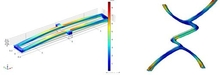
Cardiovascular disease has become a major healthcare problem. To tackle this along with bypass surgery, the use of the cardiovascular stent is considered promising and effective. In this study, we aim to find the effectiveness of stent deployments and their influence on haemodynamics ... Read More
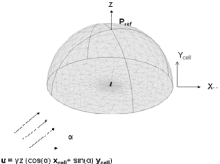
We present numerical results involving microorganisms adhering to a plane surface submitted to a shear flow. The purpose is to have a better understanding of the removal mechanisms occurring during the cleaning in place of food processing equipments. The biological cell, i.e. the ... Read More
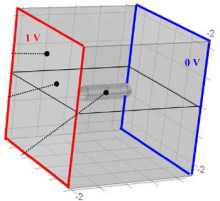
The subject of the interactions between electromagnetic (EM) fields and living cells is a strong issue for several decades [1]. Large number of works have been done to study the EM field penetration and inner induced currents in living microorganisms. Relevant information to be collected ... Read More

A 2-D unsteady viscous flow around two cylinders is studied by numerical solutions of the unsteady Navier-Stokes equations with a finite element formulation using COMSOL Multiphysics®. The results of a numerical investigation of the Strouhal frequencies of two identical, stationary, ... Read More

Heat transfer in a plane shear flow configuration consisting of two infinitely long parallel plates is considered. In laminar flows over undulated substrates eddies can be generated due to the kinematical constraints. A closed form analytical solution for the velocity field, based on ... Read More
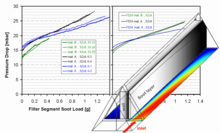
The 3D unit cell model approach offers an efficient tool to analyze the influences of geometrical design (channel shape and arrangement, filter length, wall thickness) and filter material properties (permeability, soot loading characteristics) on the performance of ceramic particle ... Read More


