
Explore the innovative ways multiphysics simulation is being used worldwide to advance research
Multiphysics modeling and simulation drives innovation across industries and academia — as is evidenced by the many uses showcased in the technical papers and posters presented by engineers, researchers, and scientists at the COMSOL Conference each year.
Draw inspiration from the recent proceedings collected below, or, to find a specific presentation or filter by application area or conference year/location, use the Quick Search tool.
View the COMSOL Conference 2026 Collection
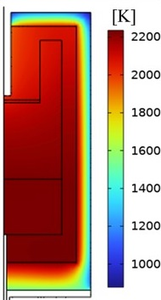
The wide bandgap semiconductor silicon carbide (SiC) has drawn increasing attention in recent years as a promising material for high-power, high-frequency, and high-temperature operating devices. These outstanding properties of SiC make it a good candidate to replace silicon in many ... Read More

Fuel cells are considered one of the most promising alternatives to conventional energy sources due to their high energy efficiency and only water from the exhaust. Accurate modeling of the fuel cell electrochemistry is crucial to optimize fuel cell performance. In this study, we ... Read More
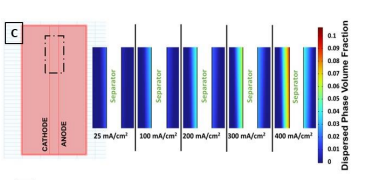
Electrolytic hydrogen production stands as a beacon of promise within the realm of sustainable energy technologies, owing to its remarkable potential for yielding hydrogen with high energy efficiency and enabling long-term energy storage. Among the gamut of hydrogen production ... Read More

The complete modelling of free radical polymerization (FRP) in a flow microreactor is dependent upon various transport processes - mass, momentum and heat transfer alongwith chemical reaction. And top of that, all processes are coupled to each other thus making modelling and simulation ... Read More

Packed bed microreactors (PBMR) and ferrofluids are independently enormously used in a broad range of applications in the healthcare sector. In a PBMR, one of the primary factors for controlling the reaction rate is the bed porosity which immediately affects the catalyst distribution and ... Read More

Electrochemistry is inherent a surface process, requiring the transport of reagents towards the electrode surface. In electrochemical reactors this typically results in mass transfer limitation problems, limiting the yield and efficiency of the reactor. While the academic community is ... Read More
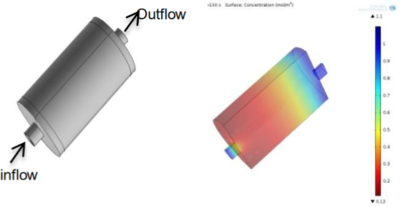
ABSTRACT: Over the years, the most common method of preventing scale formation and blockage of formation pores in oil and gas systems is by squeezing of chemicals into the formation. Different experimental and simulation studies have been carried out to understand the interaction of the ... Read More

The protection of metal surfaces against corrosion is commonly achieved by the application of organic coatings. A dedicated evaluation of those coating systems is strictly necessary before putting them into service. While outdoor test programs are time intensive and accelerated corrosion ... Read More


