
Battery Design Blog Posts

Multiphysics Simulation Brings Fast, Reliable Innovation to Electric Motorsport
COMSOL is the Official Multiphysics Partner of the ABB FIA Formula E World Championship. Learn more about what this partnership means for the future of electric racing.

How to Define Load Cycles in Battery Models: Part 2
In this blog post, we cover a straightforward approach to defining load cycles in battery models in COMSOL Multiphysics®. Part 2 of a 2-part series.

Minimizing the Charging Time of a Battery
This blog post investigates the relationship between charging time and battery longevity for a lithium-ion battery using the Optimization Module in COMSOL Multiphysics.

Optimizing Battery Pack Lifetime Using Simulation-Aided Design
Simulation-aided design offers a new method for lifetime predictions of battery systems. A guest blog author showcases how COMSOL Multiphysics makes this innovative method possible.

Modeling a Solid-State Battery Cell in COMSOL Multiphysics®
Solid-state batteries offer advantages over lithium-ion batteries, making them promising technology for electric vehicles. Simulation can help battery developers investigate design challenges.

The Effects of Varying Solvent Compositions on Lithium-Ion Battery Aging
As lithium-ion batteries age, parasitic reactions can affect the ratio of solvents in the electrolytes. Learn how the consumption of one solvent can impact battery performance.

Simulating Thermal Propagation in a Battery Pack
When batteries overheat, there’s more at stake than just losing the pack. By modeling thermal runaway, you can prevent problems before they arise.
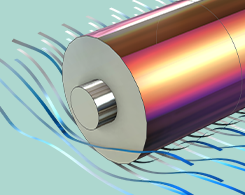
How to Define Load Cycles in Battery Models: Part 1
Specifying a load profile is critical when modeling a battery system. Explore several approaches for doing so in COMSOL Multiphysics® and the Battery Design Module.


