
General Blog Posts

Hybrid Computing: Advantages of Shared and Distributed Memory Combined
Shared memory platform + distributed memory platform = hybrid computing. Learn about the various aspects of hybrid computing and modeling in this installment of our blog series.
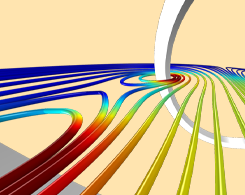
Plotting Spatial Derivatives of the Magnetic Field
Radiology, magnetophoresis, particle accelerators, and geophysics are all areas where it is useful to compute the spatial derivative of the magnetic field or magnetic flux density.
Intro to the What, Why, and How of Distributed Memory Computing
In a follow-up to our post on shared memory computing, we discuss another building block of hybrid parallel computing: distributed memory computing.

Optimizing Heater Power for Thermal Processing
We demonstrate a useful approach for process control modeling and optimization using COMSOL Multiphysics® and the Optimization Module.

A General Introduction to Chemical Kinetics, Arrhenius Law
Countless complications and pitfalls make chemical simulations challenging. Here, we give an introduction to chemical kinetics and Arrhenius law to help >>
Analyze Your Simulation Results with Projection Operators
Remember making shadow puppets on the wall with your hands? Projection operators, a method for analyzing your simulation data, work in a similar way. Let us explain…
Intro to the What, Why, and How of Shared Memory Computing
A couple of weeks ago, we published the first blog post in a Hybrid Modeling series, about hybrid parallel computing and how it helps COMSOL Multiphysics model faster. Today, we are going to briefly discuss one of the building blocks that make up the hybrid version, namely shared memory computing. Before that, we need to consider what it means that an “application is running in parallel”. You will also learn when and how to use shared memory with COMSOL.
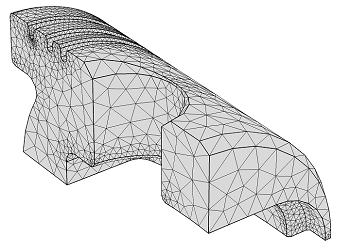
Size Parameters for Free Tetrahedral Meshing in COMSOL Multiphysics
COMSOL Multiphysics® has 9 built-in size parameter sets when meshing. In this blog post, we’ll discuss size parameters for 1 of these sets: free tetrahedral meshing.
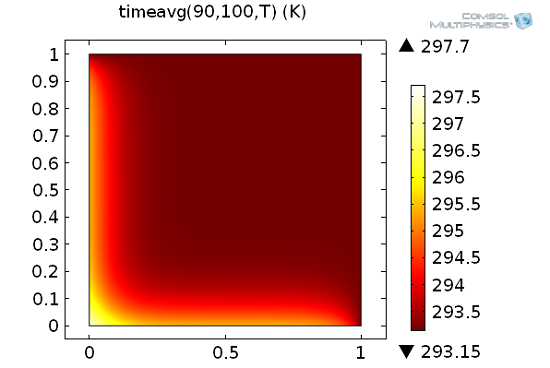
Overview of Integration Methods in Space and Time
Integration is an important mathematical tool for numerical simulations. For example, partial differential equations are usually derived from integral balance equations.
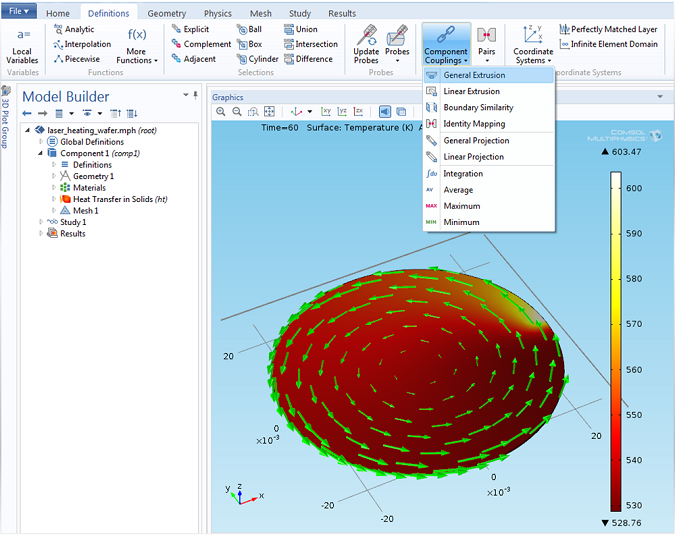
Using the General Extrusion Coupling Operator in COMSOL: Dynamic Probe
Consider a laser heating example with a moving heat source (laser) and moving geometry. How can you use the General Extrusion coupling operator to probe a solution at a point in the geometry?
Hybrid Parallel Computing Speeds Up Physics Simulations
Remember 20 years ago, when the TOP500 list was dominated by vector processing supercomputers equipped with up to a thousand processing units? Let’s take a walk through history to the future.
Solving Algebraic Field Equations
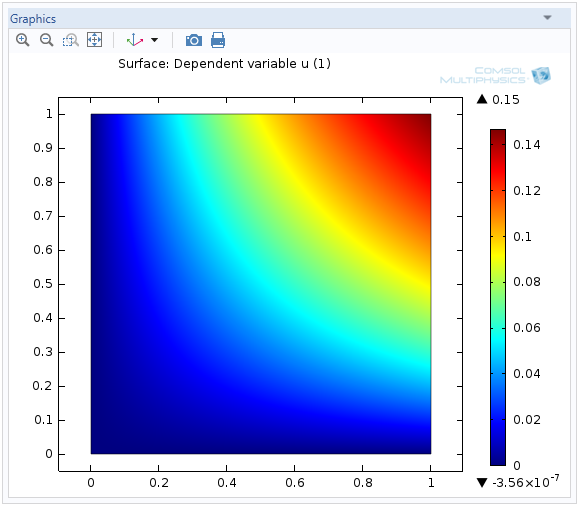
COMSOL Multiphysics® is commonly used to solve PDEs, ODEs, and initial value problems. However, did you know that you can also solve algebraic and even transcendental equations?
Visualization for 2D Axisymmetric Electromagnetics Models
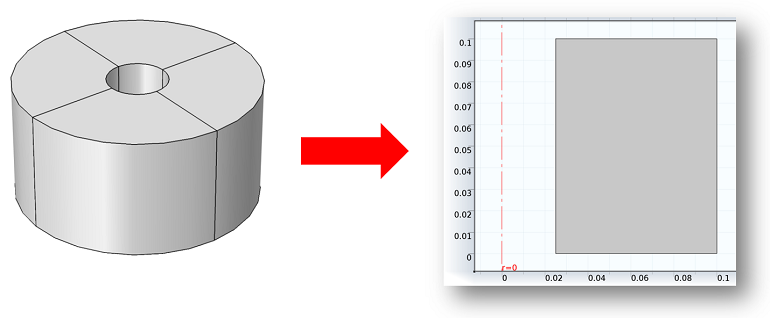
Today we’ll look at how to make 3D plots of vector fields that are computed using the 2D axisymmetric formulation found in the Electromagnetic Waves, Frequency Domain interface within the RF and Wave Optics modules.

Using Adaptive Meshing for Local Solution Improvement
One of the perennial questions in finite element modeling is how to choose a mesh. We want a fine enough mesh to give accurate answers, but not too fine, as that would lead to an impractical solution time. As we’ve discussed previously, adaptive mesh refinement lets the software improve the mesh, and by default it will minimize the overall error in the model. However, we often are only interested in accurate results over some subset of the entire model space. […]
Learning to Solve Multiphysics Problems Effectively
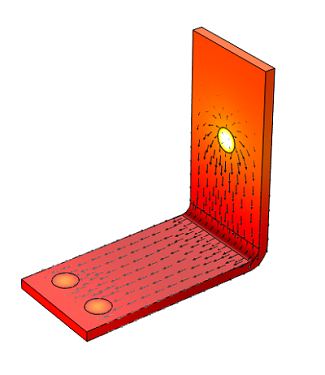
One of the questions we get asked often is how to learn to solve multiphysics problems effectively. Over the last several weeks, I’ve been writing a series of blog posts addressing the core functionality of the COMSOL Multiphysics software. These posts are designed to give you an understanding of the key concepts behind developing accurate multiphysics models efficiently. Today, I’ll review the series as a whole.
Improving Convergence of Multiphysics Problems
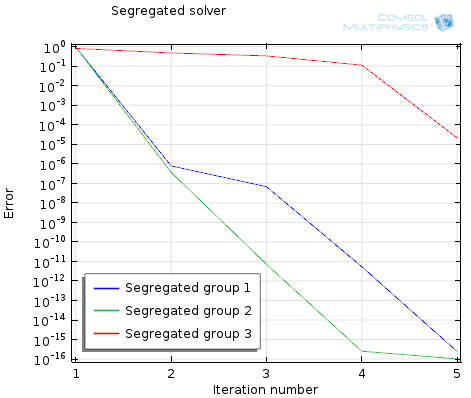
In our previous blog entry, we introduced the Fully Coupled and the Segregated algorithms used for solving steady-state multiphysics problems in COMSOL. Here, we will examine techniques for accelerating the convergence of these two methods.
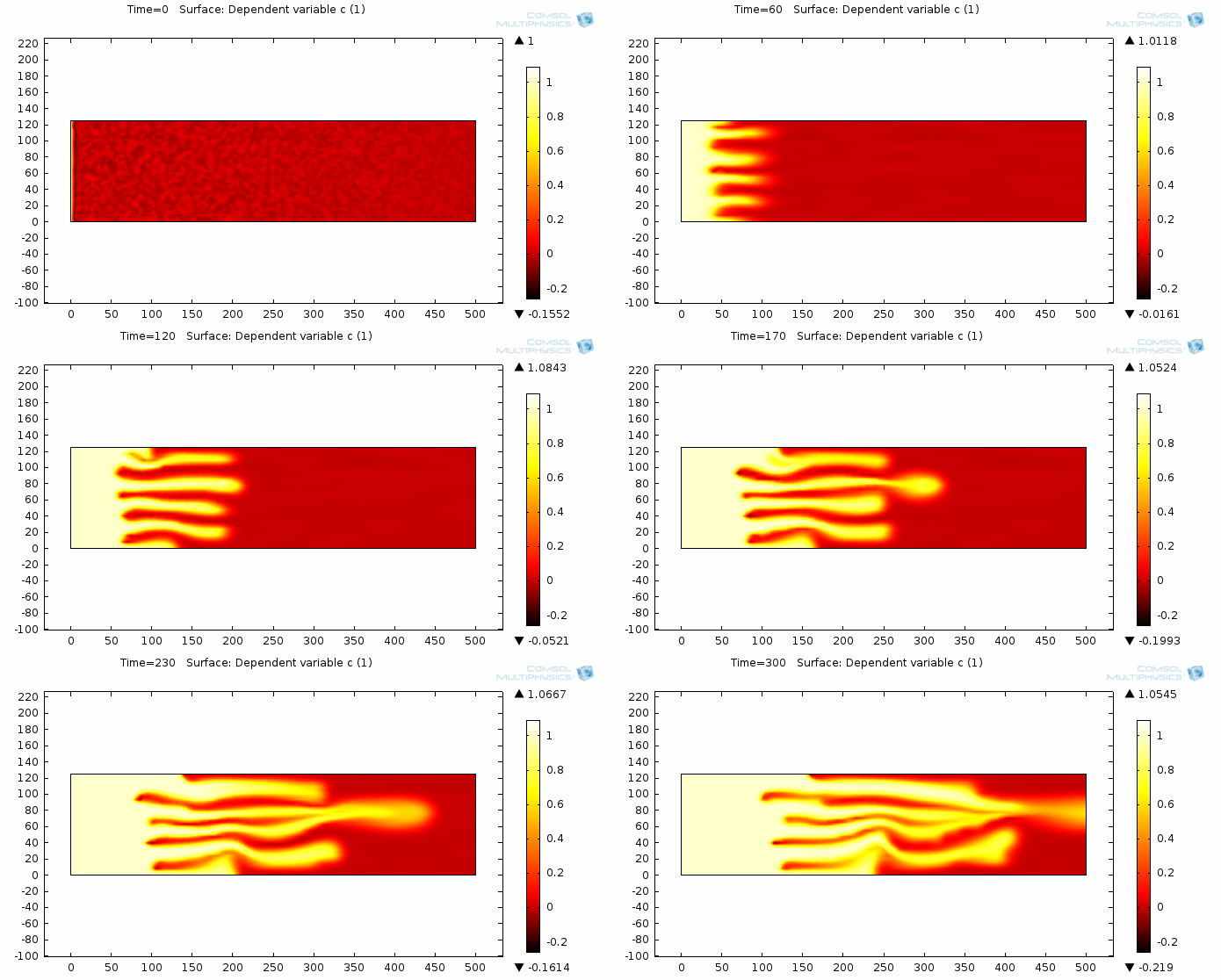
Simulating Viscous Fingering Using Equation-Based Modeling
A prospective user of COMSOL approached me about modeling viscous fingering, which is an effect seen in porous media flow. He hadn’t found a satisfying solution elsewhere, so he turned to COMSOL. I’d like to share with you some of my insight on how to go from idea to model to simulation by taking a “do-it-yourself approach” and utilizing the equation-based modeling capabilities of COMSOL Multiphysics.
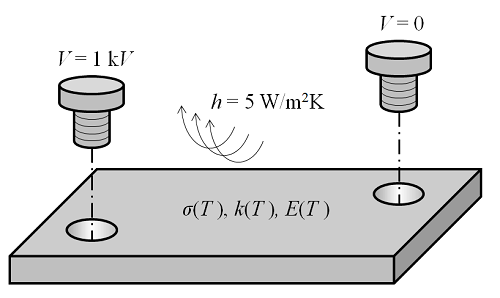
Solving Multiphysics Problems
Here we introduce the two classes of algorithms used to solve multiphysics finite element problems in COMSOL Multiphysics. So far, we’ve learned how to mesh and solve linear and nonlinear single-physics finite element problems, but have not yet considered what happens when there are multiple different interdependent physics being solved within the same domain.
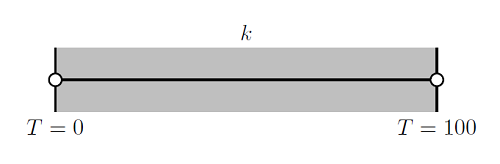
Meshing Considerations for Nonlinear Static Finite Element Problems
As part of our solver blog series we have discussed solving nonlinear static finite element problems, load ramping for improving convergence of nonlinear problems, and nonlinearity ramping for improving convergence of nonlinear problems. We have also introduced meshing considerations for linear static problems, as well as how to identify singularities and what to do about them when meshing. Building on these topics, we will now address how to prepare your mesh for efficiently solving nonlinear finite element problems.
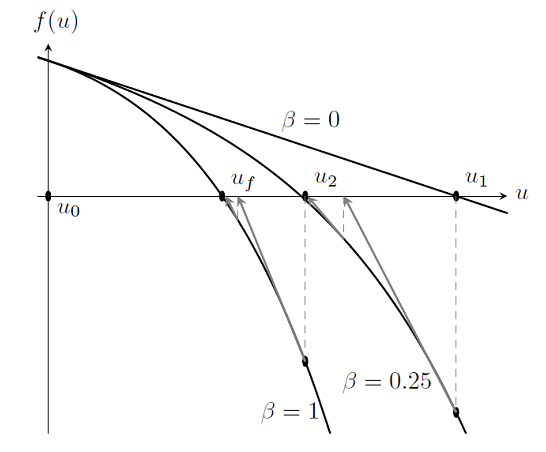
Nonlinearity Ramping for Improving Convergence of Nonlinear Problems
As we saw in “Load Ramping of Nonlinear Problems“, we can use the continuation method to ramp the loads on a problem up from an unloaded case where we know the solution. This algorithm was also useful for understanding what happens near a failure load. However, load ramping will not work in all cases, or may be inefficient. In this posting, we introduce the idea of ramping the nonlinearities in the problem to improve convergence.
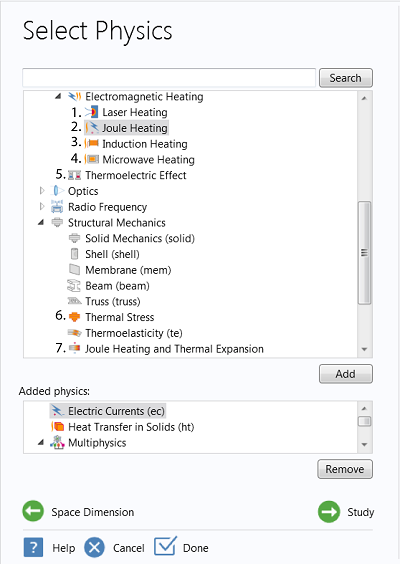
Dedicated Multiphysics Node Introduced in COMSOL 4.4
To make it easier and more transparent to define models involving multiple physics phenomena in COMSOL, a separate Multiphysics node has been added as a new feature in COMSOL version 4.4. The Multiphysics node gives you control over the couplings for thermal stress and electromagnetic thermal effects involved in your models. Future versions will include further multiphysics couplings through the Multiphysics node in addition to the multiphysics couplings methods already available since previous versions.
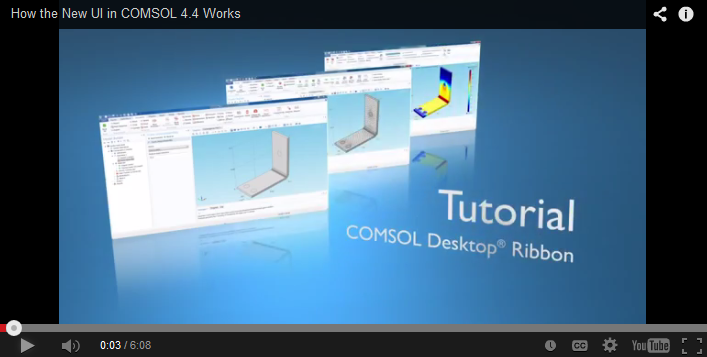
Video Tutorial: Introducing the New User Interface in COMSOL 4.4
Each COMSOL release aims to create a better modeling experience for our users, usually in the form of new add-on modules and new functionality in existing products. COMSOL 4.4 brings you all that, but it also includes another significant change: a brand new user interface (UI). The new UI contains a ribbon at the top of the interface (for our Windows® users) to make your modeling easier and faster. The ribbon gives you direct access to the functions you would […]
Load Ramping of Nonlinear Problems
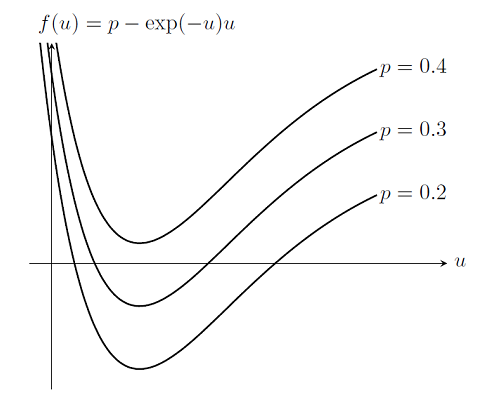
As we saw previously in the blog entry on Solving Nonlinear Static Finite Element Problems, not all nonlinear problems will be solvable via the damped Newton-Raphson method. In particular, choosing an improper initial condition or setting up a problem without a solution will simply cause the nonlinear solver to continue iterating without converging. Here we introduce a more robust approach to solving nonlinear problems.
Solving Nonlinear Static Finite Element Problems
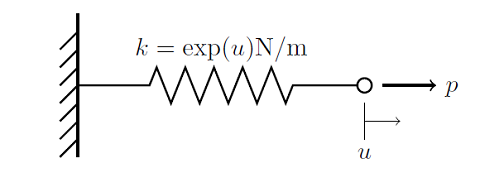
Here, we begin an overview of the algorithms used for solving nonlinear static finite element problems. This information is presented in the context of a very simple 1D finite element problem, and builds upon our previous entry on Solving Linear Static Finite Element Models.


