
The Application Gallery features COMSOL Multiphysics® tutorial and demo app files pertinent to the electrical, structural, acoustics, fluid, heat, and chemical disciplines. You can use these examples as a starting point for your own simulation work by downloading the tutorial model or demo app file and its accompanying instructions.
Search for tutorials and apps relevant to your area of expertise via the Quick Search feature. Note that many of the examples featured here can also be accessed via the Application Libraries that are built into the COMSOL Multiphysics® software and available from the File menu.

This tutorial model solves for a hydrogen plasma created in a microwave cavity. The model computes the fluid flow and gas heating self-consistently. Read More
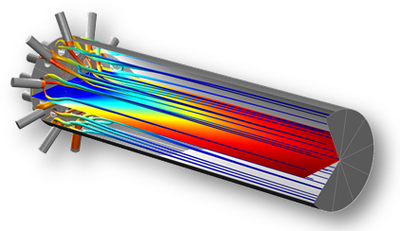
In a polymerization reactor for polyester manufacturing, the mixing in the reactor is achieved by impinging turbulent jets of reactants onto each other. The turbulence affects the reaction kinetics and quality of the polymer linkage. Turbulent flows involving rapid reaction kinetics are ... Read More
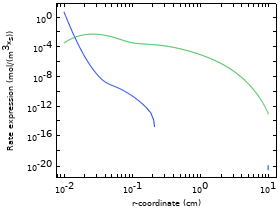
This tutorial presents a study of positive and negative corona discharges in dry air at atmospheric pressure. The discharges are sustained within two electrodes in a coaxial configuration by a high voltage DC source applied to the inner electrode. Two different types of models are used: ... Read More
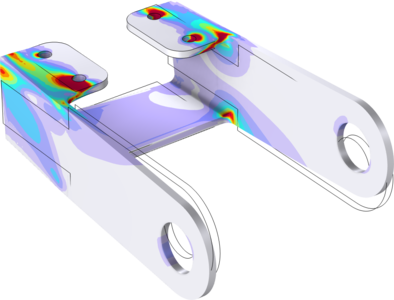
The bracket model tutorials are used as an introduction to the features and functionality within the Structural Mechanics Module. The following features are introduced: The following features are introduced: The fundamentals: static linear analysis Parametric study Including initial ... Read More
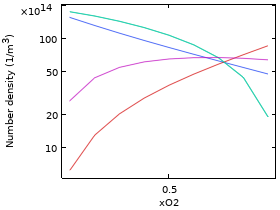
This tutorial model solves for an inductively coupled plasma reactor in a mixture of argon/oxygen. The model computes the fluid flow and gas heating. Important aspects and strategies for modeling electronegative discharges are discussed. Read More
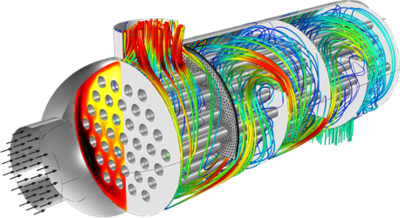
Shell-and-tube heat exchangers are commonly used in oil refineries and other large chemical processes. In this model, two separated fluids at different temperatures flow through the heat exchanger, one through the tubes (tube side) and the other through the shell around the tubes (shell ... Read More
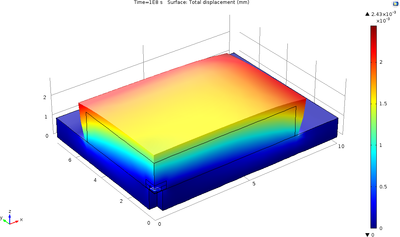
Modern integrated circuits are available as plastic encapsulated microcircuits (PEM). These devices are molded out of polymeric materials and epoxy resins in order to protect the internal semiconductors. Unfortunately, polymeric mold compounds absorb moisture when exposed to a humid ... Read More
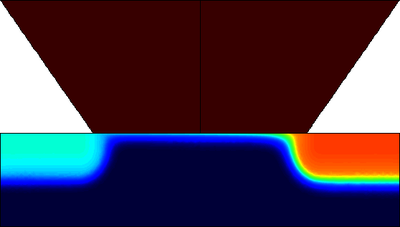
An ion-sensitive field-effect transistor (ISFET) is constructed by replacing the gate contact of a MOSFET with an electrolyte of interest. The concentration of a specific ionic species in the electrolyte can be determined by measuring the change in the gate voltage due to the interaction ... Read More
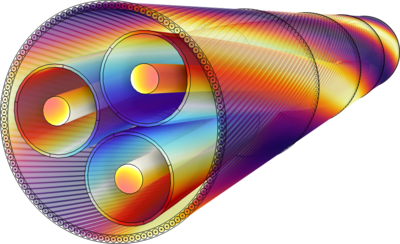
In this set of eight tutorial models and associated documentation, you can investigate the resistive, capacitive, inductive, and thermal properties of a standard three-core lead-sheathed XLPE HVAC submarine cable with twisted magnetic armor (500 mm2, 220 kV). The series includes a 2D, 2D ... Read More
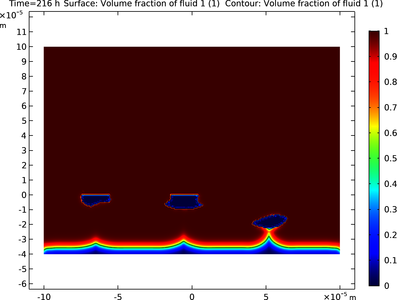
This example models galvanic corrosion between two different phases in a magnesium alloy for a representative cross-sectional microstructure configuration. The Level Set interface is used here to model dissolution of a constituent phase leading to topological changes. The electrode ... Read More


