Explore the innovative ways multiphysics simulation is being used worldwide to advance research
Multiphysics modeling and simulation drives innovation across industries and academia — as is evidenced by the many uses showcased in the technical papers and posters presented by engineers, researchers, and scientists at the COMSOL Conference each year.
Draw inspiration from the recent proceedings collected below, or, to find a specific presentation or filter by application area or conference year/location, use the Quick Search tool.
View the COMSOL Conference 2026 Collection
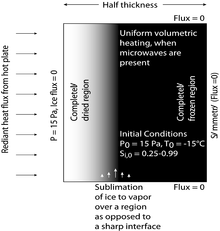
A continuum, porous medium formulation with non-equilibrium sublimation was developed and validated for freeze drying without and with uniform microwave volumetric heating. The model incorporates the effect of Knudsen flow at low pressure and low permeability freeze drying. The ... Read More

Tremendous progress is being made in the integration of nanoparticles into micro-analytical systems for biosensing. These materials are shown to enhance the analyte capture capability of biosensing platforms. We have implemented a computational model that considers the sensor’s geometry, ... Read More
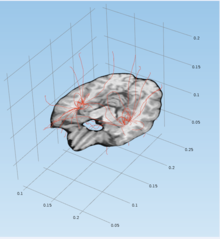
The goal of our work was to calculate a patient-specific brain conductivity map for predicting the extent to which direct stimulation therapy can strategically propagate through pathological white matter. Our laboratory developed isotropic and anisotropic human brain finite element ... Read More

The objective of this study was to develop an easy to use interface in Excel® that connects to not only the solvers in COMSOL Multiphysics®, but also existing databases of food properties, foodborne pathogenic microorganisms kinetics, and chemical kinetics, creating a comprehensive ... Read More

Although resuscitation during pregnancy is relatively uncommon and rarely causes death, they have a particularly large impact in terms of the mortality of the unborn child and long-term effects on families and society as whole. In this paper, we present a new 3D finite element model of a ... Read More

A key challenge to finding quantitative solutions to biological problems is to model the complex 3D geometry of naturally occurring structures. Model generation often starts from serial sections from CT or MRI scans, confocal microscopy, or physical sectioning. In addition, prior to V4 ... Read More
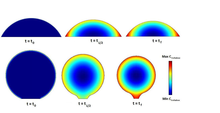
Biopreservation deals with the protection and storage of complex biologics such as proteins, lipids, and recently, mammalian cells. One preservation method, known as lyopreservation, involves placing a biologic inside a water droplet with some type of sugar excipient (sucrose, trehalose, ... Read More
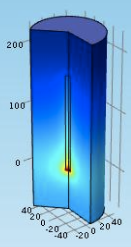
Singlet oxygen (1O2) is the major cytotoxic agent that kills cells during photodynamic therapy (PDT). Based on a previously-developed model, the distance-dependent reacted 1O2 can be numerically calculated using finite-element method. We improved the model to include microscopic kinetic ... Read More