
Explore the innovative ways multiphysics simulation is being used worldwide to advance research
Multiphysics modeling and simulation drives innovation across industries and academia — as is evidenced by the many uses showcased in the technical papers and posters presented by engineers, researchers, and scientists at the COMSOL Conference each year.
Draw inspiration from the recent proceedings collected below, or, to find a specific presentation or filter by application area or conference year/location, use the Quick Search tool.
View the COMSOL Conference 2026 Collection

Solar cooling systems based on evaporation and absorption processes have been actively studied and different mechanisms based on various refrigerants are designed and developed. Amongst these systems, a single-stage close cycle design utilizing lithium bromide salt and water (LiBr-H2O) ... Read More

Safe preservation of mammalian cells for long term is essential for medical and pharmaceutical industries. Cryopreservation by conventional slow freezing and by vitrification below freezing temperatures are the most effective biopreservation methods compared to in vitro culture at ... Read More

The equatorial region of Titan, the largest satellite of Saturn, has extensive expanses of aeolian dunes revealed in synthetic aperture radar (SAR) images and suggested to be composed of organics or organic-coated water ice. The dunes are among the youngest surface features and appear to ... Read More

A poly(methyl methacrylate) (PMMA) microfluidic platform with a hot-embossed microchannel, 150 mm wide and 20 mm deep, was developed for multiple purpose detection using electrochemical methods. This device is able to accommodate a three-electrode system encased in 1/16" diameter PEEK ... Read More

Organogenesis, the genesis of organs during embryonic development, is an active research field involving biologists, mathematicians and computational researchers. Fundamental questions of the formation of shape and the control of growth are still not answered. We focus on the development ... Read More
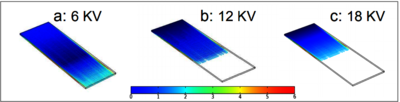
Electrostatic precipitation is an extremely efficient way of filtering fine particles from the airstream. Electrostatic precipitators (ESPs) can control airborne emission without significantly slowing down the rate of flow, because of the low pressure drop across this type of filters. A ... Read More

Photocatalysis has received considerable attention in recent years with a huge potential in air purification applications. This work focusses on the semi-passive use of photocatalytic surfaces in streets as an innovative method for removing anthropogenic pollutants (especially volatile ... Read More
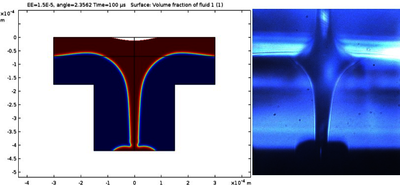
Laser-induced forward transfer (LIFT) is a non-contact direct-write technique that enables the deposition of small volumes of material into user-defined high-resolution patterns with a wide range of structural and functional materials. There are many variations of the LIFT process, each ... Read More


