
Explore the innovative ways multiphysics simulation is being used worldwide to advance research
Multiphysics modeling and simulation drives innovation across industries and academia — as is evidenced by the many uses showcased in the technical papers and posters presented by engineers, researchers, and scientists at the COMSOL Conference each year.
Draw inspiration from the recent proceedings collected below, or, to find a specific presentation or filter by application area or conference year/location, use the Quick Search tool.
View the COMSOL Conference 2025 Collection
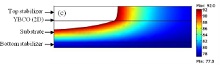
A successful development of an effective quench detection and protection method for a high temperature superconducting (HTS) coil based on a HTS coated conductor tape lays on a thorough understanding of its slowly propagating, three-dimension (3D) quench behavior. Toward this goal, a 3D ... Read More

Dielectrophoresis (DEP) is a method for cell manipulation without physical contact in lab-on-chip devices, since it exploits the dielectric properties of cells suspended in a microfluidic sample, under the action of locally generated high-gradient electric fields. The DEP platform that ... Read More
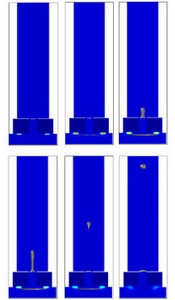
The present study investigates simulation model and droplet ejection performance of a thermal-bubble microejector. This model simulates the bubble nucleation and the bubble growth, to predict the droplet ejection process. Specificity, it is achieved by coupling an electric-thermal model ... Read More
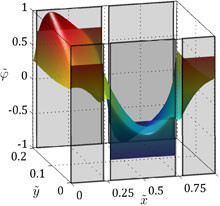
In this paper we present results of the mathematical modeling of AC electroosmotic micropumps. Unlike others we use the full dynamic description, instead of the linearized model. Skewed hybrid discretization meshes are employed in order to accurately capture the main features of the ... Read More

The silicon diaphragm is one of the most common structures in Micro-Electromechanical Systems (MEMS). However, it is susceptible to creep deformation at elevated temperatures. This paper presents a transient finite element model which simulates the mechanical behavior of the ... Read More

Cantilever vibration in fluid environment is probably one of the most common Fluid Structure Interaction problems in the field of Micro/Nano Electro Mechanical Systems. Usually the effect of fluid on cantilever oscillation is characterized in terms of mode resonance frequencies and ... Read More
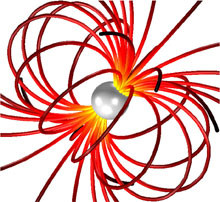
In this work, we show that dipolar magnetic coupling can be used to control the particle flow through microfluidic structures without changing the state of motion of the carrier liquid. Also no external magnetic gradient fields are employed; the total external magnetic force applied is ... Read More

In this work, we demonstrate the implementation of the micromagnetic equations for the description of ferromagnetic thin films in COMSOL Multiphysics®. We apply our model to magnetoresistive sensors consisting of several soft ferromagnetic layers and their response to magnetic particles. ... Read More

Since a couple of years, sintering becomes more and more important for power electronics. To press a semiconductor under high temperature in silver paste on a substrate promises benefits for durability. Tests with semiconductors of different thickness expose some problems. After the cool ... Read More
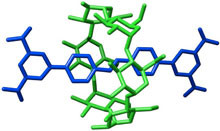
Rotaxanes are a class of molecules recently developed in laboratory that have been heralded as possible molecular motors. The motor is constituted by a linear molecule (thread) and a ring-shaped molecule (macrocycle), which is free to move along the thread, switching between two, or ... Read More


