
Explore the innovative ways multiphysics simulation is being used worldwide to advance research
Multiphysics modeling and simulation drives innovation across industries and academia — as is evidenced by the many uses showcased in the technical papers and posters presented by engineers, researchers, and scientists at the COMSOL Conference each year.
Draw inspiration from the recent proceedings collected below, or, to find a specific presentation or filter by application area or conference year/location, use the Quick Search tool.
View the COMSOL Conference 2026 Collection

To assess the safety deep geological repositories for nuclear waste, it is important to have a clear understanding of groundwater flow at the interface between the storage vault and the fractured rock. Traditional approaches for modelling groundwater often consider both the geological ... Read More

Surface engineering is a key technology used in a wide range of sectors in industry. Among other techniques, it involves adding functionality to a surface. This can be performed by creating a specific topography to a surface using laser texturing. The objective of the work presented in ... Read More

Applications of mid-infrared photonic technologies are fueled by innovative advances in quantum cascade lasers, and other key optical components like MEMS gratings and fiber-optics. The integration of devices into optoelectronic packages for stable operation at high powers poses also ... Read More

The Hyperloop is a concept system targeting passenger transportation aiming to carry people in a pod running in a high vacuum tube at 1200 km/h. In 2015, SpaceX announced that they would sponsor a Hyperloop pod design competition, because of their interest in helping to accelerate the ... Read More
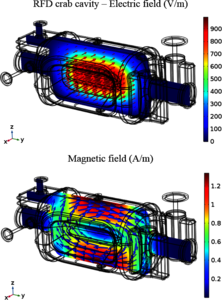
The Large Hadron Collider (LHC) is the world’s largest and most powerful particle accelerator. The LHC machine consists on a 27 km circumference tunnel that accelerates and collides proton beams and heavy ions. The High Luminosity LHC (HL-LHC) is a project aiming to upgrade the LHC ... Read More
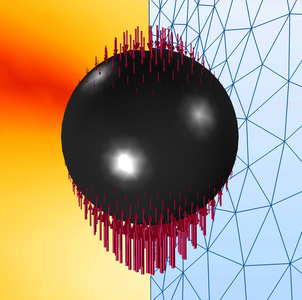
Introduction: Acoustic levitators are used to levitate small samples (ca. 0.01 - 6 mm) at a stable position in a gas or liquid environment. Acoustic levitators were first developed und used for experiments in space (1970s, by NASA / ESA), the application later became terrestrial (1990s). ... Read More

Micromachined ultrasound transducers can work as a sensor or actuator for measuring fluid speed and direction, mixing and exciting particles (sonication), taking images (ultrasonography), non-destructive testing and many other purposes in various fields. In this work, a COMSOL ... Read More

In the last few years printable electronics has gained a great deal of interest since it promises mechanical flexibility and extremely low production costs. One approach to achieve printable electronic devices relies on the usage of specific inks containing e.g. dispersed semiconductor ... Read More


