
Explore the innovative ways multiphysics simulation is being used worldwide to advance research
Multiphysics modeling and simulation drives innovation across industries and academia — as is evidenced by the many uses showcased in the technical papers and posters presented by engineers, researchers, and scientists at the COMSOL Conference each year.
Draw inspiration from the recent proceedings collected below, or, to find a specific presentation or filter by application area or conference year/location, use the Quick Search tool.
View the COMSOL Conference 2025 Collection
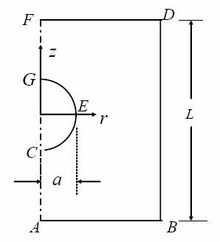
Study of interaction of drops and bubbles with electric field is important for understanding the physics involved in various physical phenomenas and industrial processes. Important applications arise in colloidal systems (Miller and Scriven, 1970), meteorology and cloud physics (Sartor, ... Read More

The paper provides an overview of the state of art in computational electromagnetic. There are three major ar eas like Design, optimization and material selection for the electric machines. The computational tool based on finite elements is very useful and powerful field simulation ... Read More
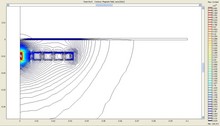
Electromagnetic Forming (EMF) is a promising and relatively new manufacturing technology having significant advantages over conventional forming processes. A primary characteristic of this process is use of noncontact electromagnetic forces to achieve forming and shaping of various ... Read More
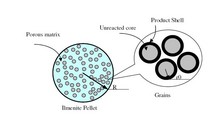
A novel mechanism for the carbothermal reduction of Ilmenite is proposed and validated with the help of a comprehensive mathematical model. A time-dependent isothermal pellet-grain model is used to simulate the kinetic behaviour of a spherical pellet of ilmenite (FeTiO3) in CO/CO2 ... Read More

In this paper, detail magnetostructural analysis of fusion grade superconducting toroidal field coils that are used in ‘tokamaks’ is presented. The stresses that arise due to Lorentz forces in large size superconducting coils that carry high currents are of catastrophic type in nature. ... Read More

Spent fuel transportation casks are required to meet among others (test conditions), the regulatory thermal test conditions in order to demonstrate their ability to withstand specified accidental fire conditions during transport. This paper describes the transient thermal analysis ... Read More

The effects of electric fields on combustion flames have been studied by using several types of experimental techniques as well as few numerical methods. The flame is influenced by the electric field mainly due to the charges present as a result of chemical reactions that take place in ... Read More

Microplasmas at atmospheric pressure are required in many applications, where treatments in normal ambient, with spatial resolution, are important. The interest on such miniaturized sources has increased due to the availability of a new generation of microwave sources based on high power ... Read More
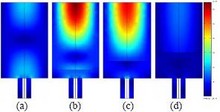
The Microwave Electrothermal Thruster (MET) is a space electric propulsion device that uses an electromagnetic resonant cavity within which a free-floating plasma is ignited and sustained, heating a propellant gas that is that exhausted out of a gas-dynamic nozzle. For an empty cavity ... Read More

Magnetic fluids containing nano or submicron magnetic particles and their application in food, biological and pharmaceutical systems have recently attracted increasing attention. Magnetic particles can be collected efficiently in magnetizable matrices (e.g. iron wires) in high gradient ... Read More


