
Explore the innovative ways multiphysics simulation is being used worldwide to advance research
Multiphysics modeling and simulation drives innovation across industries and academia — as is evidenced by the many uses showcased in the technical papers and posters presented by engineers, researchers, and scientists at the COMSOL Conference each year.
Draw inspiration from the recent proceedings collected below, or, to find a specific presentation or filter by application area or conference year/location, use the Quick Search tool.
View the COMSOL Conference 2026 Collection

We demonstrate a COMSOL Multiphysics®-based approach to light management for upconversion-based solar cells (UBSCs). Single-junction solar cells are of high importance to sustainable energy production, however the cells are limited in their performance by the bandgap of the solar cell. ... Read More

Micro-transfer printing (MTP) enables mass-transfer of wafer-level chips having lateral dimensions ranging from 3 x 7 um to 650 x 650 um to a nonnative substrate. This is accomplished with an elastomeric stamp containing micrometer scale posts that have been precisely defined using ... Read More

Municipal Solid Waste (MSW) landfills typically experience significant settlement associated with various multi-physical factors such as waste property, placement timing, total height, and environmental conditions such as temperature and saturation throughout the lifetime of the ... Read More

Elastocaloric heating/cooling takes advantage of the structural changes in shape memory alloys (SMAs) that release and absorb heat when a strain is applied over a transition temperature. Heating/cooling cycles that use SMAs offer a potential solution to issues associated with the use of ... Read More

In this research work, we developed a virtual model to examine the electrical conductivity of multilayered thin films when positioned above a single layer and multilayers of graphene, and flexible polyethylene terephthalate (PET) substrate. Additional structured thin films were ... Read More
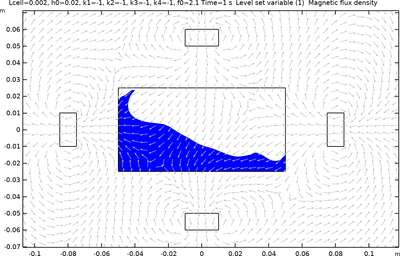
Ferrofluid sloshing vibration energy harvesters are the recent addition in the domain of vibration energy harvesting systems. These systems are unique in their use of a liquid state transduction mechanism to harvest ambient vibrations/oscillations to generate electric power. In this ... Read More
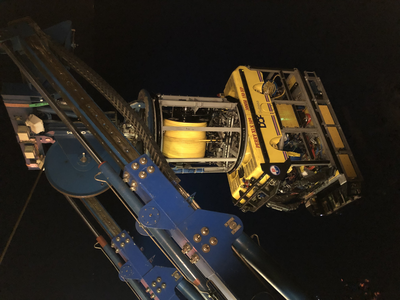
Offshore operations, using Robotically Operated Vehicles (ROVs) in areas with high ambient temperatures require ampacity limitations to be established. Specifically, the risk of overheating ROV umbilicals and tethers when running at high power, due to multiple layers on winch drums is a ... Read More

Canada’s plan for the long-term management of spent nuclear fuel in a deep geologic repository (DGR) designed by the Canadian Nuclear Waste Management Organization (NWMO) consists of a steel used fuel cannister (UFC) with a copper coating surrounded by a highly compacted bentonite (HCB) ... Read More


