
Explore the innovative ways multiphysics simulation is being used worldwide to advance research
Multiphysics modeling and simulation drives innovation across industries and academia — as is evidenced by the many uses showcased in the technical papers and posters presented by engineers, researchers, and scientists at the COMSOL Conference each year.
Draw inspiration from the recent proceedings collected below, or, to find a specific presentation or filter by application area or conference year/location, use the Quick Search tool.
View the COMSOL Conference 2026 Collection

Spatial Atomic Layer Deposition (SALD) is a novel technique that allows the deposition of thin films at a considerably shorter time than the conventional Atomic Layer Deposition (ALD) techniques while retaining its unique assets, i.e. high-quality films at low temperature, precise ... Read More

Kejako is developing a non-invasive solution for demanding presbyopia patients seeking to keep their quality of life through the compensation of visual accommodation decay. The company has already developed the first and proprietary 3D parametric model of the complete eye. The model ... Read More

Metal-organic chemical vapour deposition (MOCVD) is a well-known process to produce high quality thin films that can protect, ennoble and functionalize metallic tools. To realize a high performance coating on a complex 3D mold surface, knowledge about the material formation from a ... Read More

Damage models can be used to simulate the quasi-brittle behaviour of cementitious materials, since they can represent cracking in a smeared-way under various loading conditions. COMSOL Multiphysics® developed a functionality to access external material models for structural mechanics in ... Read More

Sediment transport in shallow water is of concern in many hydro-ecological problems. Erosion or sedimentation processes are not only relevant in perennial systems as rivers, lakes, reservoirs and coastal regions, but also in ephemeral phenomena like gullies, inundations and floods. ... Read More

The mesh is a key component in numerical simulations as it represents the spatial discretization of the model geometry. To accurately measure the variation of the unknowns, a relevant mesh should have a high density of degrees of freedom in regions where the norm of the gradient of the ... Read More

Assessing the severity of the internal corrosion of structures is of paramount importance in the oil & gas industry. Modelling and simulation of this process proved to be key techniques to understand its mechanism and the main factors influencing its severity [1-4]. Considerable ... Read More
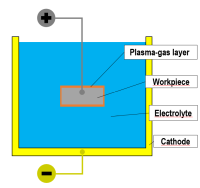
Plasma electrolytic polishing (PeP) is an electrochemical method for surface treatment. In detail PeP is a special case of anodic dissolution [1] that unlike electrochemical polishing requires higher voltage and uses environment friendly aqueous solutions of salts. When the process ... Read More


