
See How Modeling and Simulation Is Used Across Industries
Multiphysics modeling and simulation drives innovation across industries and academia — as is evidenced by the many uses showcased in the technical papers and posters presented by engineers, researchers, and scientists at the COMSOL Conference each year.
Draw inspiration from the recent proceedings collected below, or, to find a specific presentation or filter by application area or conference year/location, use the Quick Search tool.
View the COMSOL Conference 2025 Collection
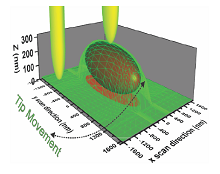
Electrical scanning probe microscopy (SPM) techniques, such as electrostatic force microscopy, nanoscale impedance microscopy or scanning near field microwave microscopy, are a relatively new branch of microscopy techniques that can generate images of the nanoscale electrical properties ... Read More

Column Loudspeakers employ multiple drivers to get close to a radiating line source. A line source gives several acoustic advantages versus a point source, especially in highly reverberant environments. This property particularly has made column loudspeakers the preferred solution in ... Read More

Ubiquitous, unobtrusive wearable computing has tremendous potential for impacting many applications including medical, personal entertainment and surveillance. Advances in the underlying technology have allowed for consistent reduction in the size and weight of emerging solutions, with ... Read More
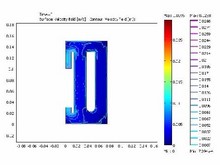
Iouri Balachov is a Senior Scientist at SRI International (Menlo Park, CA) where he is leading development of Direct Carbon Fuel Cell technology for clean and efficient power generation from coal, biomass, and a wide variety of carbon containing fuels. Prior to SRI he was an engineer at ... Read More

Although the Near Field Communication (NFC) concept has been developed for the short distance communication between the NFC-reader antenna and transponder/Tag, yet the requirements of different Automotive OEMs vary drastically. For instance, for the keyless entry into the car based on ... Read More
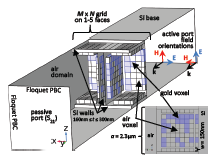
Introduction: In recent years, metasurfaces have been demonstrated to control the phase and amplitude of light across a planar interface and implemented for optical functions such as beam-steering, focusing, and polarization rotation. Initial efforts using plasmonic-based scatterers ... Read More
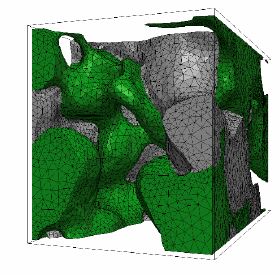
Fuel cells are electrochemical devices which produce electricity from renewable and clean resources, such as hydrogen. Their large-scale exploitation is expected to impact positively our approach to use electric energy in vehicles, buildings and other portable/stationary applications. ... Read More

The finite element method was used for simulating the dielectric response of polymer matrix dielectric composites with randomly and evenly distributed fillers. The dielectric simulation of the composite materials was conducted using a time harmonic-electric current solver in the AC/DC ... Read More

In the conference we bring together a community that is scientifically diverse in an event about the use of COMSOL Multiphysics. Oral and poster presentations highlight achievements in multiphysics modeling and simulations using COMSOL. Read More
A Proton Exchange Membrane Fuel Cell (PEMFC) is an electrochemical device, which converts a part of heat from the formation of water into electricity. Each cell has a Membrane-Electrode Assembly (MEA) which is placed between two electrically conducting plates having gas flow channels. An ... Read More


