
See How Modeling and Simulation Is Used Across Industries
Multiphysics modeling and simulation drives innovation across industries and academia — as is evidenced by the many uses showcased in the technical papers and posters presented by engineers, researchers, and scientists at the COMSOL Conference each year.
Draw inspiration from the recent proceedings collected below, or, to find a specific presentation or filter by application area or conference year/location, use the Quick Search tool.
View the COMSOL Conference 2025 Collection
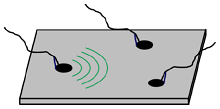
For active Structural Health Monitoring (SHM), one popular sensor type is the piezoelectric wafer active sensor (PWAS) due to its multi-purpose application as actuator and sensor and its low cost. It is used to generate a wave field, which interacts with the structure and is recorded by ... Read More

PCR (Polymerase Chain Reaction) is a recent well researched technique which can be employed to obtain an amplified DNA (Deoxyribonucleic Acid). A continuous flow polymerase chain reaction with integrated MEMS based design micro heater for DNA amplification is implemented. Temperature ... Read More

Optical tweezers work on the idea of non-contact Optical Pressure felt by transparent particles, when shined by coherent light source such as lasers. On the other hand when light falls on the metal it excites the electron inside it and make them free. When these free electron cloud ... Read More

The possibility to detect and probe molecules in microfluidic devices gives rise to interesting applications. There are different approaches how to detect and probe particles, but a common step, for most methods, is to place the particles on a sensor. This can be done by applying ... Read More
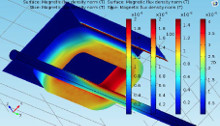
The paper describes the use of COMSOL Multiphysics to simulate an ECT (Eddy Current Testing) sensor, designed to inspect the elements of the reinforcement of concrete structures. The paper describes the steps for the COMSOL simulation, and analyze the results for three configurations ... Read More

Microwave impedance microscopy (MIM) is a novel mode of atomic force microscopy that can measure topography and local electrical impedance simultaneously and with nanometer spatial resolution [1]. This technique is typically used qualitatively, identifying defects in nanodevices or ... Read More

The use of numerical techniques in PEM fuel cell sensoring represents an advantage of project engineering, reducing the costs and accelerating the manufacturing of prototypes. In this work some numerical responses are shown, relating to numerical sensoring of water and oxygen mole ... Read More
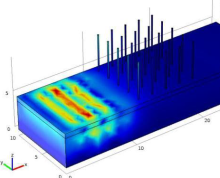
The objective of this paper is to design a 3D Gas Sensor for sensing Hydrogen gas and to increase the conductivity at nano level. In this novel design, nanorods act as the sensing layer. The sensitivity towards gas adsorption is found to be increased due to its high surface to volume ... Read More
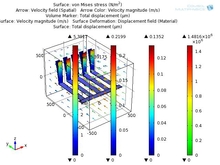
The biological hair-cell is a modular building block of a rich variety of biological sensors. These sensors are responsive to various mechanical properties like vibration, touch, gravitational forces, etc., especially flow. Using micro and nano-fabrication technology, an engineering ... Read More

The Marine Controlled Source ElectroMagnetic (marine CSEM) is a geophysical method used by the oil industry to investigate resistive targets in the sediments under the ocean floor. In this work we simulate marine CSEM data including 1D, 2.5D and 3D modeling. The results obtained with ... Read More


