
See How Modeling and Simulation Is Used Across Industries
Multiphysics modeling and simulation drives innovation across industries and academia — as is evidenced by the many uses showcased in the technical papers and posters presented by engineers, researchers, and scientists at the COMSOL Conference each year.
Draw inspiration from the recent proceedings collected below, or, to find a specific presentation or filter by application area or conference year/location, use the Quick Search tool.
View the COMSOL Conference 2025 Collection
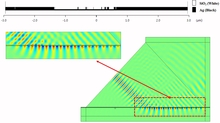
Nanoscale structural analysis and design is presented. All the simulations are carried out using a finite element solver and optimization is performed using parameter and topology optimization schemes. It is concluded that COMSOL is effective for analysis and design of nanoscale ... Read More

Here we calculate opto-mechanically induced Surface Acoustic Waves upon a silica microresonator using COMSOL. Using conservation of momentum, we show both analytically and numerically that the photonphonon interaction within the resonator cavity causes a moving train of electrodes - a ... Read More
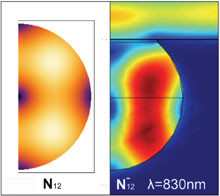
The use of plasmonic effects to dramatically enhance the electromagnetic field near the surface of a metallic nanostructured surface has grown into a large research area in the effort to take advantage of the surface enhanced field. In this paper the electromagnetic field near a nano ... Read More

This paper presents and discusses HazRes’ research and results associated with the simulation and modelling of hydrogen release and dispersion events in indoor enclosed environments, using COMSOL Multiphysics. HazRes has developed a gas dispersion model in COMSOL, which takes into ... Read More

Piping is a kind of internal erosion that occurs under water retaining structures lying on a sandy soil. In an attempt to reproduce the growth of erosion channels in sand, a small scale physical model has been set up in the laboratory and a finite element model that reproduces the ... Read More

COMSOL Multiphysics® software is used to model a water tree in tape shield and concentric neutral cables. It allows for the effect on electric field intensity at the tip of the water tree and electric potential due to the water tree to be better understood. Also, COMSOL is used to ... Read More

The newly emerging field of carbon-based MEMS (C-MEMS) attempts to utilize the diverse properties of carbon to push the performance of MEMS devices beyond what is currently achievable. Our design employs a carbon-carbon composite using nano-materials to build a new class of MEMS ... Read More
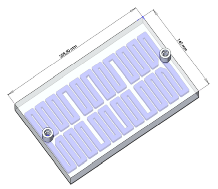
Introduction: Power electronic converters such as those for High Energy Physics Experiments (HEPEs) must operate in thermally hostile environment. Heat generated by electronics components must be conveniently dissipated to ensure electrical performances and improve reliability. Due to ... Read More

Infrared spectroscopy can be used to identify chemicals in a stream provided the signal is strong enough. A microfluidic device is modeled here with the objective of separating serum components so as to enhance the metabolite/protein concentration ratio. Serum contains creatinine (a ... Read More

In the developing embryo, neurons form connections by projecting axons to appropriate target areas. The projection process includes neurite elongation, resulting from the assembly of new cytoskeletal material at the free end of the axon, a complex cascade of steering decisions, driven by ... Read More


