
Explore the innovative ways multiphysics simulation is being used worldwide to advance research
Multiphysics modeling and simulation drives innovation across industries and academia — as is evidenced by the many uses showcased in the technical papers and posters presented by engineers, researchers, and scientists at the COMSOL Conference each year.
Draw inspiration from the recent proceedings collected below, or, to find a specific presentation or filter by application area or conference year/location, use the Quick Search tool.
View the COMSOL Conference 2026 Collection

COMSOL Multiphysics® with LiveLink™ for Matlab® is used for the numerical analysis of dielectric barrier discharges (DBD), which are widely used in various fields of plasma technology, such as surface processing, plasma medicine, and agriculture. The fluid model comprises balance ... Read More
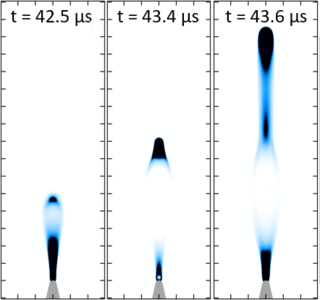
Corona discharge in atmospheric-pressure air has been the subject of a vast number of theoretical studies for many years. However, a theoretical description of gas breakdown development still has some difficulties due to both a wide range of initial conditions, under which gas breakdown ... Read More

Accumulation of plastic solid waste is a large share of municipal solid waste (MSW). Thermochemical treatment processes are a vital component of a sustainable integrated MSW management since they reduce the volume of the waste significantly. In conjunction with our efforts to develop ... Read More
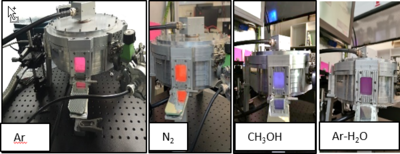
Thermal decomposition of plastic waste results in gas products, mainly hydrocarbon molecules (C2-C6), which cannot be released to the atmosphere for environmental reasons. Here, we propose a secondary gas treatment to decompose the hydrocarbon gas products into smaller molecules by ... Read More
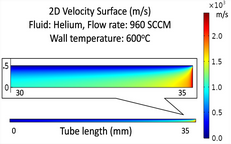
Accumulation of plastic solid waste is a large share of municipal solid waste (MSW). Thermochemical treatment processes are a vital component of a sustainable integrated MSW management since they reduce the volume of the waste significantly. In conjunction with our efforts to develop ... Read More
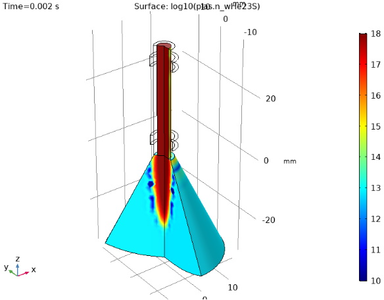
Atmospheric-pressure plasma jets (APPJ) are devices that generate chemically reactive species and operate at atmospheric pressure and ambient temperature for a wide range of applications. Plasmas jets produce charged particles (electrons and ions), neutral metastable species, radicals, ... Read More
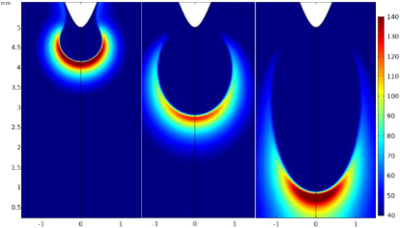
Although SF6 gas is characterized by a strong global warming potential, traditionally, it has been employed universally as the dielectric insulation gas for most electrical equipment because of its excellent technical performances. With the emergence of environmental regulations for ... Read More
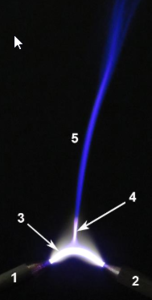
In 2016 the group of experimentalists from the Institute of High Current Electronics (Tomsk, Russian Federation) have been discovered a novel phenomenon related to atmospheric plasma jets that was called an “apokamp” (originated from Greek words “off the bend”). This new plasma jet ... Read More
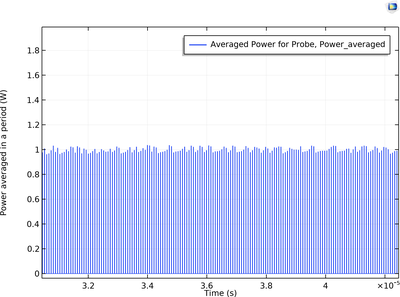
A power supply is generally used in many electrical devices. In order to deliver uniform power irrespective of time variation, most plasma equipment also uses a power source. Therefore, the power condition in plasma simulations is essential. In time-dependent models using a current ... Read More

Helicon Injected Inertial Plasma Electrostatic Rocket (HIIPER) [1] is a plasma thruster being researched at University of Illinois Urbana-Champaign. It has been shown in Figure 1. It involves a helicon source along with an Inertial Electrostatic Confinement (IEC) chamber. IEC is a fusion ... Read More


