
Lorenzo Bortot, CERN, Switzerland
Engineers and physicists at CERN go to great lengths to ensure that the high-power superconducting magnets that maintain the circular trajectory of particles inside the Large Hadron Collider (LHC) do not revert to a resistive state, an event known as a quench. To understand and prevent quench events, Lorenzo Bortot, an electrical engineer and research fellow at CERN, used numerical simulation to develop a multiphysics, multiscale, and multirate representation of the electrodynamics and thermal evolution of a quench event.
Suggested Stories
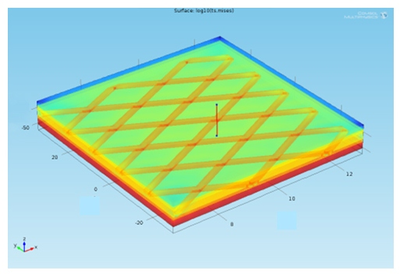
Boeing Simulates Thermal Expansion in Composites with Expanded Metal Foil for Lightning Protection of Aircraft Structures
Carbon fiber composites are used extensively throughout the body of modern aircraft, such as the Boeing 787 ...
Defending Automotive Components Against Corrosive Destruction
Galvanic corrosion, which occurs when the surfaces of different adjoining metals begin to degrade, costs the ...
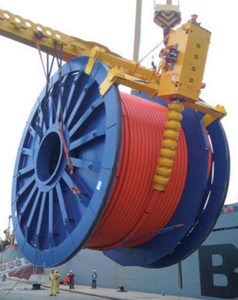
Analysis of Subsea Umbilicals and Cables
JDR Cables designs-to-spec and manufactures subsea umbilical systems of cables and reelers for the oil and gas and ...
The Sweet Side of Simulation Behind the Scenes at Nestlé
To produce chocolate, wafers, cereals, and everything in between, R&D engineers at Nestlé’s Product Technology ...


