
Lorenzo Bortot, CERN, Switzerland
Engineers and physicists at CERN go to great lengths to ensure that the high-power superconducting magnets that maintain the circular trajectory of particles inside the Large Hadron Collider (LHC) do not revert to a resistive state, an event known as a quench. To understand and prevent quench events, Lorenzo Bortot, an electrical engineer and research fellow at CERN, used numerical simulation to develop a multiphysics, multiscale, and multirate representation of the electrodynamics and thermal evolution of a quench event.
Suggested Stories
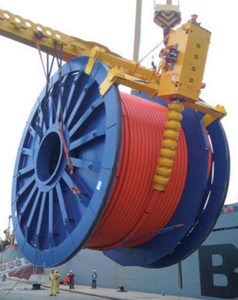
Analysis of Subsea Umbilicals and Cables
JDR Cables designs-to-spec and manufactures subsea umbilical systems of cables and reelers for the oil and gas and ...
Making Biofuel a Cost-Effective, Renewable Source of Energy
Pyrolysis is a pre-commercial thermochemical process that converts renewable, plant-based materials such as wood into ...
Undocking Better Boat Landing Designs for Offshore Wind Turbines
Wood Thilsted, a leader in offshore engineering, used structural analysis to design boat landings that can withstand ...
ABB’s Electromagnetic Flowmeter Digital Twin Drives Performance
ABB built a digital twin of an electromagnetic flowmeter to mimic an actual flowmeter in a virtual environment. The ...


