
Harvey Buck, Roche Diagnostics Operations, Inc., Indianapolis, IN, USA
The test strips in glucose monitors, widely used by people with diabetes to maintain good health, are sensitive to chemical interferences and environmental conditions. The manufacturing process and electrode configuration of these strips also affects response accuracy. Researchers at Roche Diagnostics Operations, Inc. used multiphysics simulation to analyze the chemical reactions and voltage response in their glucometers.
Using COMSOL Multiphysics, Harvey Buck, principal scientist at Roche, investigated different configurations and materials used in the test strips. He analyzed the electrical response to an applied voltage during the chemical reaction catalyzed in a sample. Through numerical simulation, he predicted the sensitivity of electrical impedance measurements to mechanical properties of the sensor. He also optimized the electrode configuration, maximized sensitivity to cell fraction in a sample, and minimized sensitivity to manufacturing tolerances. These simulation results have given the Roche team a better understanding of their integrated sensor design for glucose monitoring.
Suggested Stories
Understanding Brillouin Optomechanical Interaction with Multiphysics Modeling
Researchers from the University of Campinas and Corning wanted to see how photoelastics and moving boundary effects ...
Multiphase Flow Simulation Guides Wastewater Treatment Plant Design
To improve the health of the Dommel river, an aeration unit has been added to the Eindhoven wastewater treatment plant ...
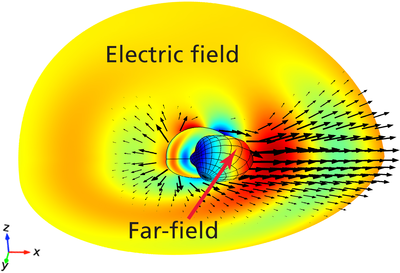
Scattering of Electromagnetic Waves by Particles
When electromagnetic waves propagate through matter, they interact with inhomogeneities and particles that can locally ...
Multiphysics Analysis Helps Preserve the Past
Jos van Schijndel is the founder of Netherlands-based consulting firm CompuToolAble and assistant professor at ...


