
General Atomics Designs Helicon Antenna for Tokamak with Simulation
Humberto Torreblanca, General Atomics, USA
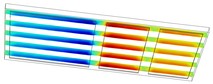
Built by engineers at General Atomics, the DIII-D tokamak needs to achieve temperatures that are 10 times hotter than the core of the Sun to achieve nuclear fusion. To accomplish this, a novel heating system using a helicon antenna that can inject 1 megawatt of RF power is being designed and built. Humberto Torreblanca, the DIII-D tokamak chief operator, and his team are using multiphysics simulation to model all aspects of the design, such as the magnetic field distribution inside and outside the tokamak vessel as well as the electric field distribution and RF losses of the helicon antenna.
Suggested Stories
Look Inside the Battery with COMSOL Multiphysics®
The key to designing high-performance, durable, and safe batteries is to first understand the battery technology and ...
Analyzing the LHC Magnet Quenches
Engineers and physicists at CERN go to great lengths to ensure that the high-power superconducting magnets that ...
Modeling the Electrochemistry of Blood Glucose Test Strips
Lifescan Scotland is a medical device company that designs and manufactures blood glucose monitoring kits for the ...
Virtual Material Design in 3D Printing Makes Headway with Multiscale Modeling
The advantages of anisotropic properties in 3D printing materials have been difficult to exploit for product design, ...


