
Monika Weber
Yale University
New Haven, CT
Professor Mark Reed and his team at Yale University are using COMSOL Multiphysics to develop a MEMS-based solution for detecting bacteria in blood. Called the α Screen, it will provide analyses speedily, accurately, and cost-effectively. Such a device would greatly help the food industry in improving meat quality and reducing the risk for infections. Current methods take too long for most food industries to use, as they need to deliver and sell food fresh, while newer alternatives are too expensive for routine use.
As a member of this leading nanotechnology group, Monika Weber used COMSOL Multiphysics to simulate aScreen and optimize its performance. This included modeling the microfluidics of the device and using particle tracing to track the potential routes taken by bacteria within the device.
With her model and presentation of the aScreen, Weber won the 2011 NASA Tech Briefs Create the Future Design Contest.
Suggested Stories
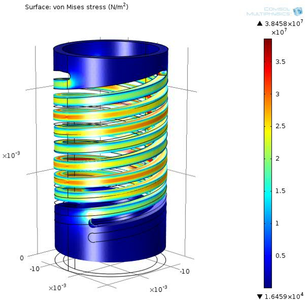
Meeting High-Speed Communications Energy Demands Through Simulation
The information and communication technology industry needs new energy-efficient devices that can keep up with the ...
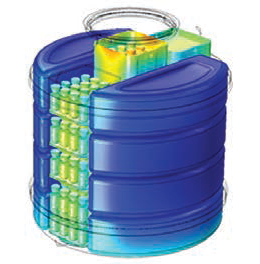
Innovative Thermal Insulation Techniques Bring Vaccines to the Developing World
When medical professionals transport vaccines, their cargo needs to be kept at a cool temperature. This limits their ...
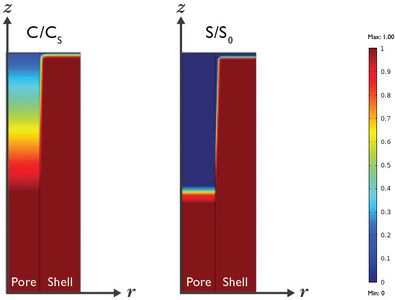
Simulating the Release Mechanism in Drug-Eluting Stents
Stent insertion through the coronary artery is a common procedure used to treat restricted blood flow to the heart ...
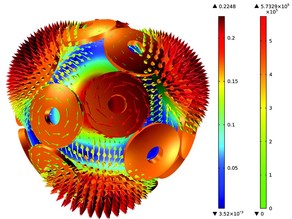
Reduced-Weight Reaction Sphere Makes Way for Extra Satellite Payload
CSEM is a private applied research and development center specializing in micro-technology, system engineering, micro ...


