
Toyota Improves Electronic Component Cooling with Simulation
Toyota Research Institute of North America, MI, USA
The Toyota Research Institute in Ann Arbor drives cutting-edge research in energy efficiency, mobility infrastructure, and safety. Here, Ercan Dede and his team are designing heat sinks (or cold plates), which are affixed to fragile electrical systems and other applications in Toyota’s hybrid vehicles.
Their simulations simulate the cold plate’s topology for improved cooling efficiency while minimizing pressure drop. Previous designs provided good heat transfer, but at the cost of significant pressure drops across the plate. Making use of branching channels, the heat sinks provide the same heat transfer but with an optimized flow path. Using LiveLinkTM for SolidWorks®, they were able to create fast and accurate design iterations, leading to an optimal cold plate topology.
SolidWorks is a registered trademark of Dassault Systèmes SolidWorks Corp.
Suggested Stories
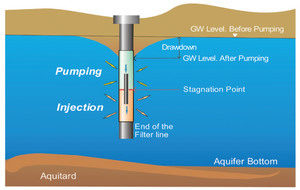
Pumping and Injecting from a Single Borehole
Professor Dr. Martin Sauter leads a group at the University of Göttingen in research on hydrogeology. Cooperating with ...
Training Uncrewed Underwater Vehicles for Visualization of Subsurface Structures
By using simulation apps and machine learning techniques, USM researchers are laying the groundwork for UUVs capable ...
National Grid Models Underground Cable Routes
U.K. National Grid bears responsibility for maintaining the high-voltage transmission network in the U.K. Determining ...
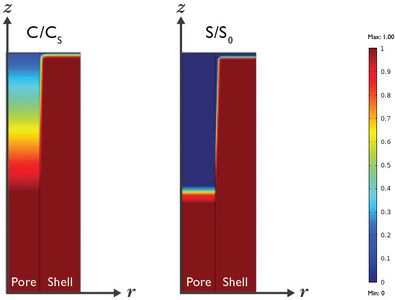
Simulating the Release Mechanism in Drug-Eluting Stents
Stent insertion through the coronary artery is a common procedure used to treat restricted blood flow to the heart ...


