
Clemson Simulates Electrode Setup for Dielectrophoresis
G. Zhang
Clemson U, SC, USA
J. Brcka, J. Faguet, E. Lee
Tokyo Electron, TX, USA
Dielectrophoresis (DEP) is a method of patterning cells and particles used in medical, electronics, and energy applications. When an electric field is applied to an array of cells or dielectric particles suspended in a medium, they become polarized, causing movement that reorganizes the particles. This is an efficient way to assemble materials layer by layer at the nanoscale, and is sometimes used in mass production of materials. Through a partnership between Clemson University and Tokyo Electron U.S. Holdings, Inc., researchers are analyzing unexpected particle rotation and alignments they have observed during cell patterning. They have used COMSOL Multiphysics models to understand cell patterns and material assembly; their simulations account for nonhomogeneous cell properties and electric field distortions, which they are analyzing to predict the influence of DEP force on this behavior.
Suggested Stories
Driving EV Development with a Twin-Battery Approach
IAV developed an approach for combining sodium-ion and solid-state lithium iron phosphate battery technologies to form ...
Training Uncrewed Underwater Vehicles for Visualization of Subsurface Structures
By using simulation apps and machine learning techniques, USM researchers are laying the groundwork for UUVs capable ...
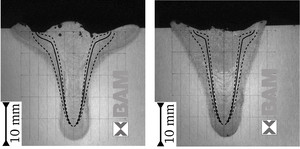
Magnets Improve Quality of High-Power Laser Beam Welding
High-power laser beam welding uses a localized heat source to achieve narrow deep welds and high welding rates. ...
Simulation Advances the Design of a Microfluidic Therapeutic Cell Sorter
The Technology Partnership (TTP), a firm that consults on technology development, created a vortex-actuated cell ...


