
Ivana Milanovic, University of Hartford, USA
While covering the required fundamental material in undergraduate academic programs is the top priority, students require an extra set of knowledge and skills to flourish in the workforce. This is especially true in science, technology, engineering, and mathematics (STEM) fields, where there is rarely an abundance of time for inquiry-based learning and the development of field-specific skills. To address this issue, the University of Hartford integrated multiphysics modeling into their curricula. Using the Application Builder in the COMSOL Multiphysics® software, the university created simulation-based laboratory assignments through apps, which enhanced students’ physical intuition and their ability to visualize physical concepts.
Suggested Stories
Giving Furniture Testing a Leg Up
Chairs must meet quality standards, which requires lengthy and costly testing. To reduce the burden on manufacturers, ...
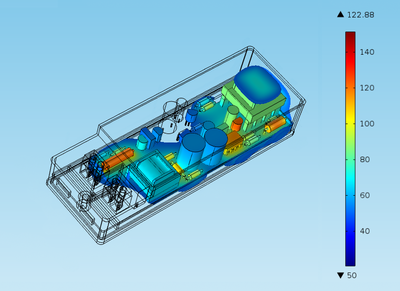
Keeping LEDs Cool Gets More Manageable Through Simulation
Light-emitting diodes (LEDs) offer many benefits over incandescent lighting, such as long life spans and high luminous ...
Powering Offshore Wind Farms with Numerical Modeling of Subsea Cables
Hellenic Cables uses finite element modeling to analyze and validate underground and subsea cable designs for use in ...
ABB’s Electromagnetic Flowmeter Digital Twin Drives Performance
ABB built a digital twin of an electromagnetic flowmeter to mimic an actual flowmeter in a virtual environment. The ...


